Horror takes many shapes and assumes various forms in order to affect us. Be it monsters, killers, or simple catastrophes, horror is there to incarnate both our deepest fears and our darkest sense of humor. By far, the Slasher Genre is my favorite kind of horror to watch, and there are hundreds to choose from out there. So much so that too many of them go overlooked and remain underrated. For that reason I, Manic Exorcism, gladly pull back the tattered veil to shed some sinister light upon these underrated slasher killers.
Uncle Sam (1996)
Yes, the patriotic spirit swept the nation this past week as droves of hard-working men and women piled into cars and made their ways to picnics, barbeques, beaches or to visit friends and loved ones. Bold rockets lit up the night sky and people sat back from Coast to Coast to celebrate how Colonials kicked a whole lot of ass back before any of us were ever born. So why not commemorate that victory with a shitty little slasher film a lot of people have never heard of?!
image via Fear Forever
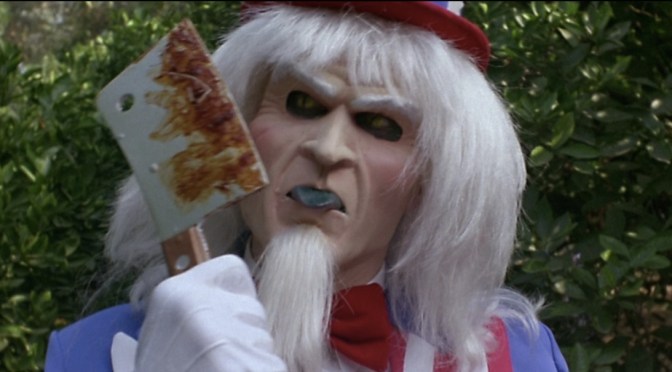
Uncle Sam is a movie that – and if – anyone has actually heard of it, they’ve never really seen it. Now, and thanks to Shudder, you can spend an evening with this star-spangled serial killer and remember freedom as the blood flows out of wounds before your eyes.
The movie is guilty fun. Let’s face it though, Slashers are not known for their acting. We know what to expect here: boobs, blood and fantastic kills. That’s the basic formula, and Uncle Sam is not above that expectation. It does have all three of those tropes here, so seasoned horror fans won’t be disappointed.
image via IMDB
That said, this movie has some of the worst acting I’ve seen since Twilight. We don’t expect anything of Hugh Jackman’s caliber here, but mother of piss is the acting terrible in this one.
Summary
So the movie is about a mean bastard of a guy named Sam Harper (David Fralick). A fucker so god-awful nasty that his fellow soldiers see him to the grave with a little ‘friendly fire.’ Back home though his now-widowed wife (Anne Tremko) is not really phased, and if anything is glad to be rid of his sadistic abuse. However, his obnoxious little nephew (Christopher Ogden) hero worships the man and can’t wait until he’s old enough to enlist himself and follow in Sam’s footsteps.
So Sam is brought back to life once a group of local morons burns a flag over his open grave, and well, this soldier ain’t staying dead for that kind of shit. His reanimated corpse comes back to inflict revenge on anyone he deems to be unpatriotic or disrespectful to the Nation. He finds some peeping-Tom dressed in an Uncle Sam costume, and after poking the perv’s eyes out (and spouting off one-liners that would make Freddy cringe, things like, “Hope you got an eyeful?” as he digs his fingers into both eye sockets) and then walks about on the 4th of July as our happy killer Uncle Sam.
image via horrorpedia
It’s a fun gimmicky movie, another holiday-centered horror flick, and honestly, that’s a category all on its own, and one the slasher genre loves to infiltrate. I felt this movie missed some golden opportunities. Like I wish there had been some hilarious Star-Spangled type of deaths. I wanted Uncle Sam to walk around shoving fistfuls of bottle rockets up people’s butts and seeing them burst from the inside out like gooey fireworks. We do get a flagpole death though.
I can’t say this is anywhere near one of my favorite slasher characters/films, but it does have a goofy charm to it. If NECA ever released an Uncle Sam figure I’d be tempted to buy the damn thing. I mean I do collect horror icons, I’m even getting my own custom-made Madman figure! Whoop whoop!
I know the holiday has come and gone already, but the movie is still a perfect choice if you’re looking for a good summer screamer to enjoy.
So yes, without any doubt Sam is worth our attention. We stand and salute you, Sir. We thank you for your service to the history of horror and may you remain obscure no longer.
Then you really might know what it’s like to have to lose.”
We first met the equally gifted and cursed Will Graham in Thomas Harris’ 1981 novel, Red Dragon, the best-seller that also introduced us to Dr. Hannibal Lecter. Outside of our imaginations, however, it would be almost five years before we would see the purposeful-looking profiler in flesh and blood on screen in Michael Mann’s Manhunter (1986), and another 16 before his last theatrical appearance in Red Dragon (2002).
From the novel, and subsequent films, we understood Graham to possess the uncomfortable and unwelcome talent of pure empathy, an ability to assume the point of view of brutal killers. While it was an ability that allowed him to translate evidence in a way that others simply could not, Harris’ words informed us of the toll it took on Graham, but it was a phenomenon that we’d never truly witnessed on-screen.
Until Bryan Fuller resurrected the Lecter universe with NBC’s groundbreaking Hannibal series in 2013.
Do you see?
After more than thirty-one years, two films and a novel, we were finally given the opportunity to truly observe Will Graham for the first time through the brilliant vehicle that is Hugh Dancy.
Prior to the opening scene of the program’s initial episode, we’d only been offered glimpses of what Graham could conjure through his unique imagination. Be it with William Petersen talking himself through the thought process in Manhunter, or the briefest of visions presented through the lens of Edward Norton’s reluctant voyeur, we never truly delved into Will Graham’s mind.
Hannibal set about changing that, and while this writer will be the first to say that Mads Mikkelsen’s Lecter is the finest portrayal of the cannibalistic caretaker, the reason that the television series soared for 39 episodes was the presentation of Will Graham.
As Damian Swift and Mark Shannon were the first to achieve the feat of penning Jason Voorhees (Derek Mears) as not only human, but human being with Friday the 13th (2009), Fuller and company allowed a similar peek behind the curtain. Graham was no longer an edgy, hesitant hero with hundreds of thousands of miles on his engine, but for the first time, the price of Graham’s gift was put on full display.
Dancy’s exhibition of Graham was closer to self-diagnosed Asperger’s and autism than a jaded veteran detective. Interaction was not just difficult, but strained and stressful. Not once was there an I-told-you-so revelation that altered the approach to a case, but rather a sad, reserved interpretation of “the ugliest thoughts in the world.”
The beauty of Hannibal, and of Dancy’s portrayal, was another line from Everlast’s “What it’s Like,” – “God forbid you ever had to walk a mile in his shoes” — a lyric that applied not only to Graham, allowing himself into the headspace of a psychopath, but to the audience that embarked on that same journey through Graham’s eyes.
And Fuller’s Hannibal wasted no time in communicating that we weren’t in Kansas anymore.
That first view found Graham analyzing the surroundings of a crime scene, then rewinding to the very moment he’d summoned the courage to kick the door in and experience the heinous thoughts, actions and sentiments of the perpetrator.
Graham entered the home with confidence, and upon putting down Mr. Marlow (Wayne Downer), emphatically declared “He will die watching me take what is his away from him. This is my design.” Next, he shot Mrs. Marlow (Bernadette Couture) “expertly through the neck,” paralyzing her before she hit the floor, setting up the first true indication that this was not the Will Graham we’d thought we known over the course of three decades.
Graham slowly walked toward the downed victim and said “which doesn’t mean that she can’t feel pain,” his eyes searching for the words, Dancy whispered a tormented “It just means,” before continuing “she can’t do anything about it.”
The empathy of Graham not only allowed him to adopt unwanted points of view, he also empathized with the victim, and the awful thoughts and visions running through his mind.
Graham would go on to point out that the work Jack Crawford (Laurence Fishburne) had recruited him to do was “not good for (him),” as we laid eyes upon the incredibly expensive emotional, psychological and physical tax of Graham’s imagination.
Hannibal’s Will Graham was not a damaged, yet contented family man who didn’t want to look anymore, he was unstable and fractured long before he stepped foot inside the Marlow home. A fragile tea cup whose crevices were sure to weaken every time he opened his eyes. Or closed them.
And it was Dancy who made each new fissure at once agonizing and exquisite, in a beautiful turn that if we’re honest about it, is the very reason fans continue to clamor for a fourth season, almost three years after Hannibal was taken off the air.
Because of Hugh Dancy, there is still a desire, dare I say a need, to borrow Will Graham’s imagination.
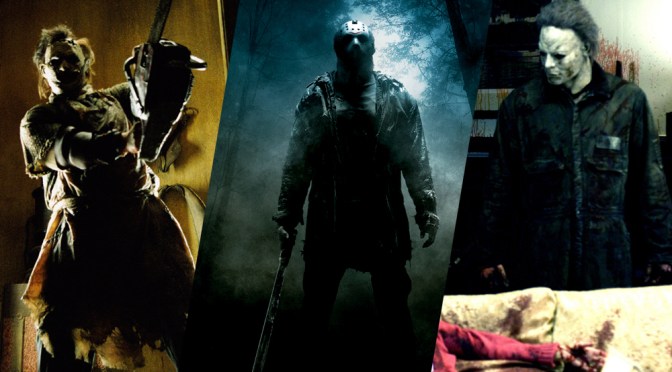
Chances are if you’re a long-time horror fan you’ve lived to see your favorite horror movie fall under the Remake Guillotine. ‘Guillotine,’ I think that’s somewhat fitting. Makes the process sound just as scary as we imagined it would be. We dreaded the news that Halloween, Poltergeist, The Omen, Fright Night and Last House On the Left were all lined up to be decapitated so new filmmakers could inspect the intimate moist jelly of some of the greatest minds behind titanic horror titles. Often times our beloved movies were nothing more than a quick cash in as studios banked on making bank just from a film’s title alone. Nightmare on Elm Street’s name would be more than enough to pull in an audience, or so it was believed. However, that movie proved to be dismal at the box office and left studio heads standing around scratching their scalps trying to figure out why. That’s part of the problem – the people (mostly) behind making these remakes do not get what made the original movies great, to begin with.
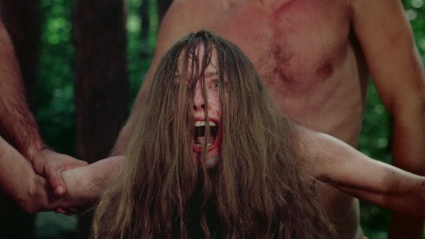
Slashers and exploitation films seem to have fallen victim most of all to this post-current trend. Both genres are notorious for their graphic use of sexuality and violence; normally, both are used interchangeably as a grotesque malformation of Life and Death. That’s the essential formula of the Slasher and Exploitation genres.
image via DVD Talk
These are movies that elicit very negative feelings from their audience. We find ourselves somehow trapped within the Hellish circumstances of the tragic heroes and victims we set out with. For nearly two hours we will have our senses assaulted by hyped-up violence and the glamorization of helplessness against cruelty. Should you enter this seedy underworld of depravity and carnage don’t be surprised if you feel the need to shower once the credits roll. No one would blame you either. These are disgusting places we must stomp through. The topics handled inside are seldom pleasant.
Who in the new millennium would dare venture out with the goal to remake some of the most notorious titles in cinematic history? Never in my life did I ever think someone would get the gumption to remake I Spit on Your Gave. Then, that remake inspired two sequels, and, admittedly, I really enjoy the second movie in the trilogy. It offered us something new out of the familiar rape-and-revenge slough. But the idea alone that it was greenlit in the first place is astonishing!
What Remakes Get Right/Wrong
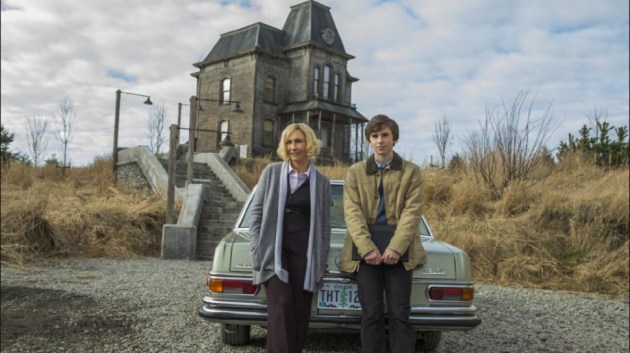
I remember back in the late 90’s someone had the bright idea to remake Hitchcock’s masterpiece Psycho. Why in the world was that ever an option? Just why? The movie happened and is nothing more than a shot-for-shot retelling of a film classic. Of course, it doesn’t hold a candle to the master’s vision. Now, on the other hand, the Psycho lore was rebooted via Bates Motel on TV and gained a successful fan following. Why did it work? Because it offered viewers something different out of the familiar lore.
image via Nerdist
Praise is due to the show Hannibal for accomplishing similar success. They managed to retell a section of the lore which we already knew, but they did it in a manner that had fans hooked and desperate to see what new grotesque beauties awaited us each subsequint episode. The storyline of Red Dragon has already had two cinematic interpretations, but this time around – even though it was technically the third retelling – it offered us something exquisitely new and innovative. Proving how the retelling of a familiar lore can (and should) be should be handled.
That’s where remakes work! That’s the key, the masterstroke of success! You see, I don’t attack remakes, I attack bad movies, and sadly most movies that are remade just suck. But there are plenty that gets it right. In the case of Hannibal, initially, I wasn’t prepared to like the series. How happy was I to be wrong once I realized how beautiful and profound this show was determined to be. It brought the stories to life, more like breathed new life into the characters, thus demonstrating how to do things properly.
Films like The Fly, The Thing, all of Hammer’s Dracula and Frankenstein movies, and even last year’s IT all proved to be successes. Why? Well, as I’ve already mentioned with Bates Motel and Hannibal, these movies work as remakes simply because they give us a brand new look at the familiar material. We’re not forced to watch a shot-for-shot retelling of a beloved title.
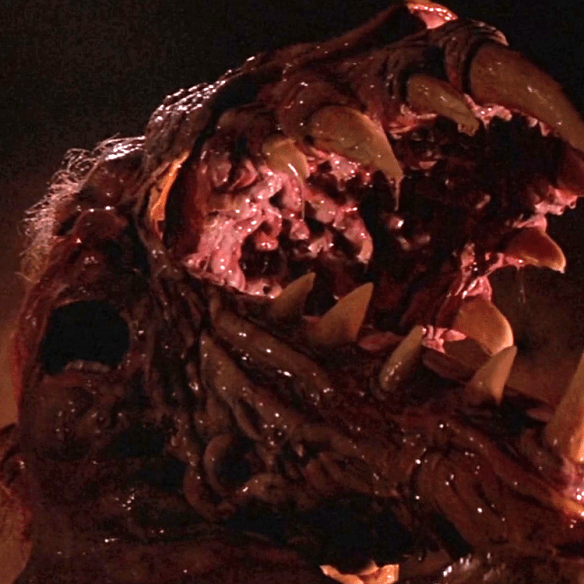
With the original The Thing, society was eaten alive with a growing paranoia that Communists could be living right next door. Who can you trust when there could be a dirty Red hiding just beyond your own front door? The Cold War was in full effect and was reflected in the spooky movies of that time. When Carpenter released his updated take, The Thing no longer spoke about ‘neighbor danger,’ but focused on the terror growing in our own bodies. The 80’s decade was a war on drugs and unsafe sex. AIDS was a real threat and people were terrified. One moment a person could appear just fine and healthy, the next that same person would be diagnosed with a terrifying disease that would end in the grave. Society was very aware of how quickly our own bodies could turn viciously against us if we weren’t careful.
image via The Thing Wiki
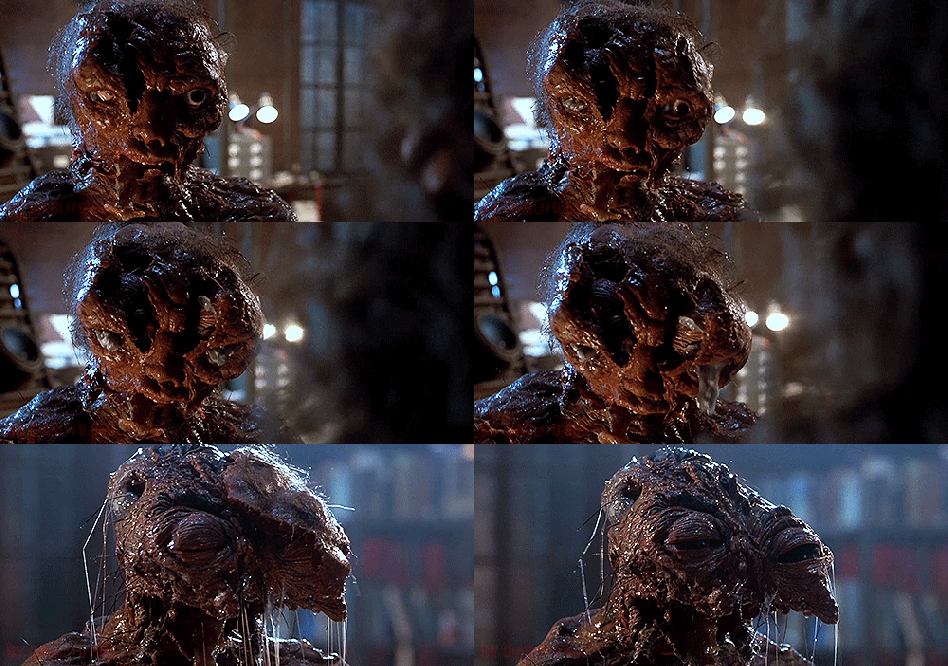
The Thing became a cautionary tale about how the body can transform with a viral enemy inside of us ready to malform our anatomy to suit its own selfish purposes. It’s no surprise that it was released during a time when people were being warned of cancer. It got to be that everything would give a person cancer. People couldn’t even feel safe breathing in the air they inhaled for fear of second-hand smoking – and you guessed it, that gave you cancer too. When you look at The Thing it’s a hideous amalgamation of swollen tumors that destroy and ruin all they touch. The movie was not well received in its day, but has now grown to cult fandom and is praised as one of the best sci-fi horror films of all time.
image via WiffleGif
The remake of The Fly is about losing control of one’s own body. All it took was one innocent night of carelessness. This body-horror classic has an underlining theme of cautionary sex, it may not be noticed at first, but once it is it’s hard to deny. Our unfortunate hero (Jeff Goldblum) gets infected by an experiment gone deathly wrong. He took every precaution. He crouches himself into the womb-shaped sanctity of the teleporter he’s built. Everything is a go, but unforeseen to him, a single freak chance of fate happens beyond his grasp, a fly lands in the teleporter and the two become merged as one entity. The consequences are dire for him. It was a simple accident, one slip of chance and all of a sudden it doesn’t matter how cautious he was. He is infected, but he hasn’t really realized it yet. He has sex with his girlfriend because of course, he does. Once she learns of his disturbing fate his girlfriend (Geena Davis) has some vivid dreams about the consequences of sleeping with her infected lover. I’m saying the word ‘consequences’ an awful lot, but that’s what this movie is all about. It’s pretty obvious that the social fear of venereal consequences is in play here.
I’m not one to argue that a good horror movie has to have come underlining social message in it to make it good. It could be simple coincidence, or maybe some deep thought was put into the making of those films. However, my point was, in the case of these remakes and what made them work, they weren’t just a rehash of the original source material. They were social up to date and played on the current fears of the people. If you make a horror film then you better at least try to aim at scaring your audience for fuck’s sake.
The only way you can scare an audience is by engaging them with the characters, make what scares them scare us, and then, after earning our trust rip our hearts out. That’s horror.
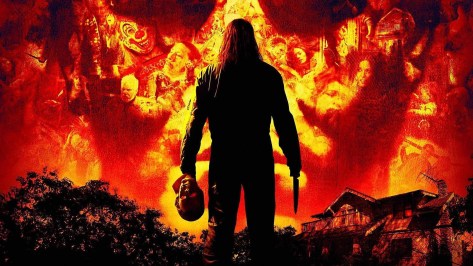
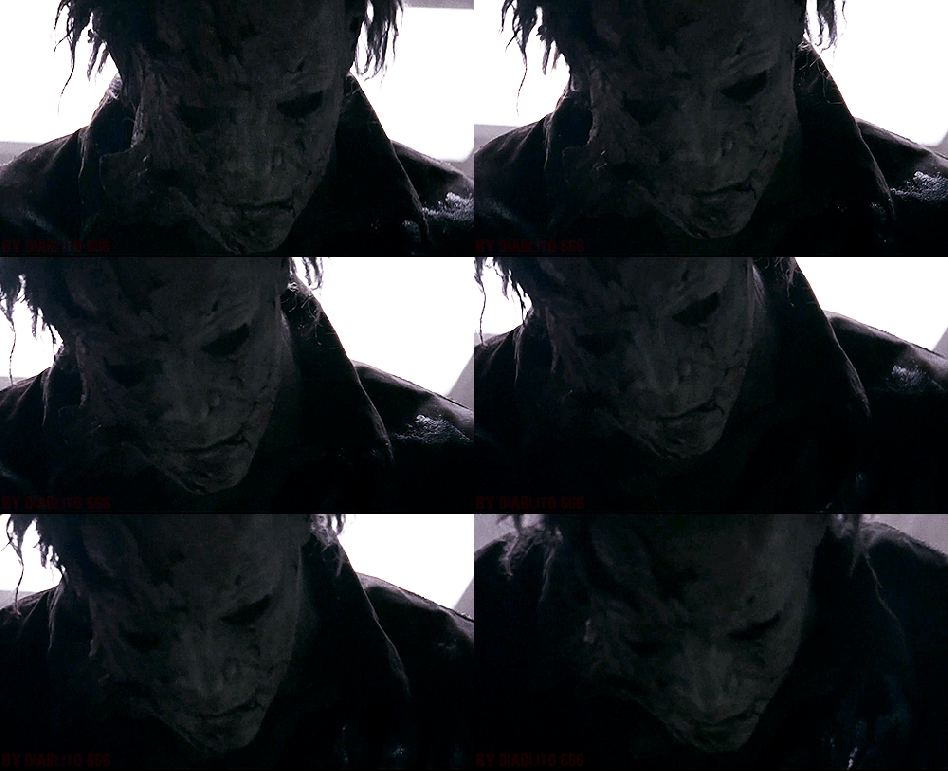
There’s no doubt people hate Rob Zombie still for remaking Halloween, one of horror’s most cherished films. To this day that movie stands like a plague in the minds of many fans. But this is what I’ve gathered from most of the people who hate it. They seem to praise the first half of the movie but curse the latter half. The first half of the film is a complete departure from Carpenter’s vision. It’s a gritty and uncomfortable look at a domestic meltdown.
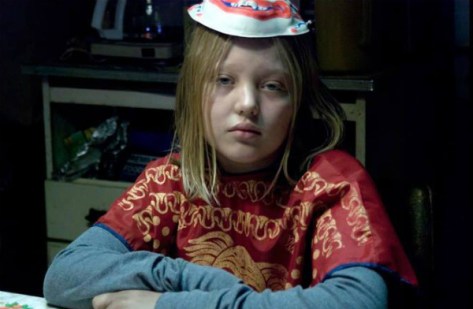
Michael is from a highly dysfunctional household. The making for disaster is found early on in the movie’s opening. Michael’s upbringing is anything but nurturing. His mother’s boyfriend is a screaming, foul-mouthed abusive man who taunts Michael every chance he can. Being the only male role-figure in his life, the man is only too happy to mock Michael’s premature sexuality, calling him girly names that almost echo John Gacy’s own abusive relationship with his dad. Even Michael’s older sister throws around oddly arousing jokes at his expense. For adults, we can laugh at sick shit like this, but this is all very damaging for the young psyche of an impressionable growing boy.
To top things off, his mother is a local stripper and her intimate way of living is constantly thrown in Michael’s face by the run-of-the-mill shitheads at school. Combine all of this and you have the gathering elements of the perfect storm. One of destruction, pain, and misery. It will not feel empathy, it will be cut off from the social norms of what’s acceptable and what’s illegal. You have the disturbed making of a true psychopath.
image via Jarvis City
This is the household environment that spawns the likes of John Gacy, Albert Fish, and Edmond Kemper – all of them real-life boogeymen. Killers, slashers, serial rapists; monsters in suits of men.
This is not the Michael Myers we know, and that made him fascinating! This was a problem, a toxic danger that could be building right next door (or behind closed doors right upstairs). Were we going to get some actual psychological inside-looks into real-life murderers through the imaginative eyes of Michael Myers? Or, what I’m trying to say is, were we going to get inside of Myer’s mind? Would we see through the eyes of madness and true darkness all from behind his mask? It was really exciting. We already had a movie that followed the babysitters, so would this movie explore a very evil world that is hiding in plain sight all around us? That heinous world of the serial killer?
Oh, forget allllllllll about that, my nasties. It doesn’t take long for this to turn into a near shot-for-shot remake (oh sorry, ‘reimagining’) of Carpenter’s movie. People love to hate this movie and use it as the poster-child of poorly made remakes, but I have my own criticism of Zombie’s movie. That being: we almost had a great movie! Almost. Had Zombie just stuck with an original idea, something like following Michael’s journey into – not only madness – but also his heart of darkness; in essence, watch him become pure evil, and go on a blood-soaked murderous rampage. Make it an exploitation film, kinda like how it started out as.
It could have been great and I feel we got robbed.
And when it comes to Nightmare on Elm Street, instead of seeing the exact same movie we’ve all grown up with, why couldn’t we see the Springwood Slasher before he became the Dream Demon? Why not show us his vengeful demise at the hand of vigilante parents? Start out with him being a good neighbor, someone who would walk your dog for you. Someone you ask for an opinion, and who is glad to give it. Someone who loves his daughter and part of the PTA board. You know, like actual serial killers from the past? They always lived across the street. Why not give us that kind of movie, something we’ve not seen? Then pull the rug out from underneath us as we follow Fred Krueger down some very uncomfortable places, places where little skulls sit in the smoldering ash of a furnace deep in the depths of his boiler room.
image via Addicted to Horror Movies
Why not give us something like the rise of the Dream Demon?
Freddy could have come back and targeted the households of the parents who burned him alive and made it, oh I don’t know, something more relatable and personal to the families along Elm Street.
Eh, what I’m getting at is these remakes that are hated so much could have been good. They had potential and a chance, and that’s what I gave them – a chance.
Now whereas remakes don’t erase the original movie (thankfully), they do pose a problem for audiences nonetheless. A person can watch a really bad remake and not want to give the original a chance.
image via cinepop
Imagine if someone watched that awful Fog remake and then had no desire to see the original one? They would be missing out on a great experience. I kind of dealt with that. Thanks to Quarantine I had no interest in seeing [REC], like at all. In fact, I only just watched [REC] this year. That’s the problem with bad remakes – they may turn people off of some really amazing movies.
Not to mention we now have to distinguish which movie we’re talking about. My best friend was so happy when she bought me Night of the Demons for my birthday. It’s one of my all-time favorites and she knew I had been wanting it. Thing is, she bought me the remake (yes, that has a remake too) when it’s the original movie I love. Bless her heart, she was so thrilled to get me that Blu-ray though. She didn’t know there were two out there. Someone else sent me Texas Chainsaw Massacre not knowing it was the remake. They honestly thought it was Hooper’s movie. There are too many remakes out there and it does get confusing.
Now we have a Suspiria remake to look forward to. Am I mad about that? No, and I’ll go to see it. Not only that, but we’re getting Pet Sematary, Tommyknockers, and honestly the remake train doesn’t look to be slowing down any time soon.
To be honest I’m excited. I know that may shock some of my readers, but this was not meant to be some ‘I hate all remakes’ article. I don’t hate them, I just want to see them done right. IT proved a remake can be done right, and, if done so, will be a massive hit.
So there you have it, my ghoulies. This has been your Manic Exorcism once again. I encourage you to not let bad remakes ruin good movies. Keep checking us out here at Nightmare Nostalgia for all your retro needs. Now go forth to enjoy the horror line-up before us.


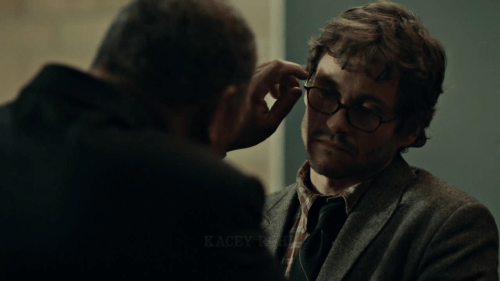 And Fuller’s Hannibal wasted no time in communicating that we weren’t in Kansas anymore.