Category Archives: Editorials

Memories Won’t Fade even as Ash vs Evil Dead Says Goodbye

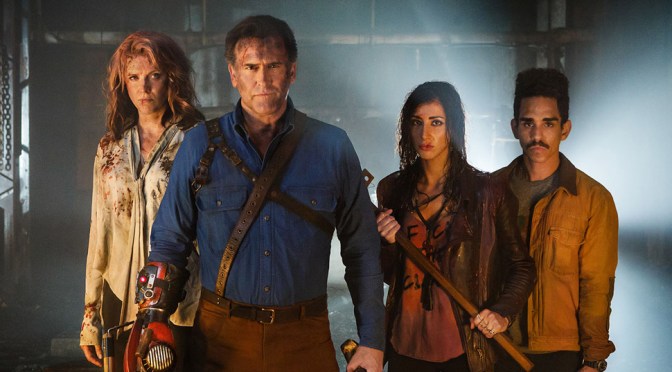
After nearly forty years, we’re sad to say goodbye to a franchise that has given us three films and thirty television episodes. That heartbreak has less to do with Ash Williams, and everything to do with our memories of watching The King ham it up.

Those memories are different for everyone. It could be where you were when you first laid eyes on The Evil Dead, or the people with whom you watched Army of Darkness, or or perhaps the way the splatstick of Ash vs Evil Dead helped you put your troubles on the back burner, if only for 30 minutes. It goes without saying that memories are a very personal thing, but make no mistake, the reason Bruce Campbell and the Evil Dead universe resonate so deeply with fans comes down to individual circumstance.

For me, it was the routine of waking on Sunday mornings after a night of shenanigans and grabbing my phone to pull up the latest chapter of AVED. It’s been my way for three years now, and I’d be lying if I said I weren’t going to miss the hell out of it. To be honest, though, I must admit that it’s been the interactions I’ve blessed to experience with cast members that endeared me most to Ash vs Evil Dead. Hell, I almost set Ted Raimi up on a blind date, but I’ll get to that.

I’m not even going to discuss the interview I scored with the King two days before the Season 2 finale (though it took two years to land, and I was never so nervous in my life), because in a matter of seconds before our discussion came to a close, Campbell provided a gift that can never be repaid.
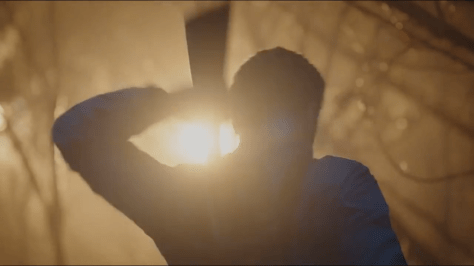
CampbellSince entering the arena of horror writing, one relationship has towered above all others, and that is my friendship with the owner and operator of Nightmare Nostalgia, Patti Pauley. Many times she’d mentioned that Bruce Campbell was her son’s hero, and I always told her that should I get the opportunity to speak with the man who was Ash, I’d see about getting a personal message for her boy. So when the time came, I asked Campbell if he’d be good enough to share a few words, and he didn’t disappoint.

While the message itself was vintage Bruce — short and not-so sweet — her delight when I told her that he’d agreed to say something had me grinning from ear-to-ear. However, it wasn’t until later that night that I realized that she’d not only shared that message with her son when he got home from school, but on Facebook as well. I watched as her child gasped and faux-fainted when he discovered that a message from Bruce Campbell existed that was for his ears only. Thinking about it now makes me giddy beyond belief, because it’s a moment that doesn’t belong to the masses, but the three of us, to be cherished forever.

Like the conversation I had with Dana DeLorenzo in my kitchen.

It wasn’t that she’d no doubt done innumerable interviews with other outlets, or that she found it funny that I’d been involved with the “Thanks for talkin’” conference call months earlier, but my discovery that she was every bit as charming and hilarious off screen as she was fierce as Kelly Maxwell on. DeLorenzo shared that she couldn’t wrap her head around the fact that she was doing a Q&A with a popular horror outlet in the same room where she’d played with Barbies as a child, before offering exquisite teaser after exquisite teaser.
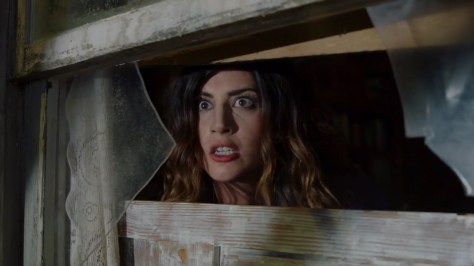
DeLorenzoI won’t lie, it was a fantastic discussion, but while the thought never crossed my mind that I was “in” with her (and still don’t), it led to a shot in the dark that I’m glad I took. About a week into Women in Horror Month 2017, it dawned on me that securing a true horror heroine to wrap the month would be fantastic, and the first person who came to mind was Ms. DeLorenzo. So I messaged her to ask if she’d be interested in penning a piece for HorrorGeekLife about her experiences in the genre, with zero expectation. To my surprise, she agreed, and shared a beautifully poignant and inclusive piece that left HGL’s editor in tears. Till my last breath, I will never believe that she said yes, but if you ever want to know how incredible Dana DeLorenzo is, look no further than that act of generosity.

Which brings us to her partner in crime, the powerful vagina himself, Ray Santiago.

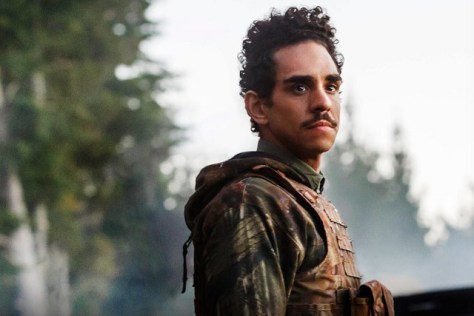
With a telephone conversation during or prior to each season, Santiago is the only Ghostbeater whom I’ve had the pleasure of speaking with more than once. After Baal sliced and diced Jefe’s right-hand man near the end of Season 2, I chatted with Santiago and wasn’t entirely convinced that we’d seen the last of Pablo, and felt compelled to say that if it was the end, I spoke for Evil Dead fans everywhere in thanking him for the franchise’s finest character not named Ash, and a job well done.
AvD-Pablo2

To my shock, Santiago was touched by the sentiment, stammering through “Dude, you literally just made me…that makes my day.” The thought of that exchange still makes me smile, to say nothing of the shit-eating smirk that appeared on my mug after Kelly and Pablo finally locked lips during the current season which led to my tweet “Can we just agree that Kelly and Pablo are the Jim & Pam of horror?” Santiago responded with a message that was short, but much sweeter than Campbell’s – “Love you for saying this!”

Just because I’ve written for a couple of newspapers doesn’t mean I don’t have occasion to geek out from time-to-time.

Like the summer of ’16, for instance.

When I found out that Mr. Raimi had joined the cast for Season 2 (long before any of us realized that he’d reprise his role as Henrietta, or that Chet housed a monumental secret for three decades), I made it a goal to score the genre legend. Having delighted in his responses and ridiculous, infectious laugh for half an hour, the moment arrived for me to tell him that a colleague of mine at iHorror, Waylon Jordan, wanted me to inform Raimi that he loved Ted in a “totally non-weird way.”

Once again, Raimi cackled, and sans hesitation, shot back “Well, you tell him back that I love him in a completely weird way. Like, I’m just in love with him, and I would very much like his phone number.”
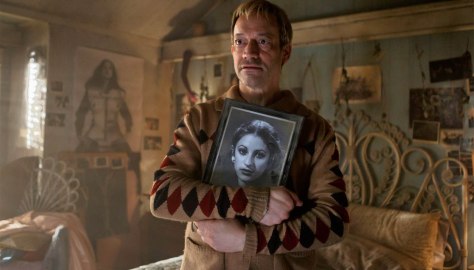
RaimiMy “alright” was met with more laughter and “Tell him if he’s ever available for dates, I’m a great date. And I promise not to be too grabby on the first one.” I cannot begin to describe my elation at sending that clip to a friend.

But that’s what it’s all about.

Look, if you’re still reading this, then you love the Evil Dead universe and probably have similar experiences that you hold dear. And that’s the reason none of us are ready to say goodbye and that this franchise has life almost forty years after it began.

Yes, the films are fantastic fun, but it’s not just about watching and re-watching those movies or the series, but of the times you spent with family and friends as you took it all in, or interactions you’ve had with Campbell or Raimi or DeLorenzo or Santiago at conventions or chance encounters on the street.

More than a scene or a kill or a one-liner, those are the moments that stay with you. We’ll always have three seasons of Ash vs Evil Dead (and, of course, the features), but I will carry the memories that I’ve collected over three years and thirty episodes for the rest of my life.

So I will savor Ash vs Evil Dead’s conclusion with a smile on my face, and maybe even shed a tear or ten.

For irreplaceable memories, both on screen and off, I offer a heartfelt thank you to the cast and crew of the best show on television.

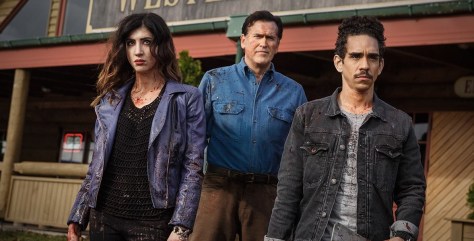
To the Ghostbeaters.
Ghostbeaters 2

The Only Word Worthy of Kelly Maxwell

WARNING: If you have not seen “Tales from the Rift,” turn back now. There are spoilers afoot.

Twenty-six episodes. More than two-and-a-half seasons of Ash vs Evil Dead have brought me to the realization that I still lack the vocabulary to capably describe Dana DeLorenzo as Kelly Maxwell.

Thoughts of Ambrose Redmoon’s declaration that “courage is not the absence of fear, but rather the judgment that something else is more important than fear” danced through my head, but soon faded because that too, was an insufficient concept.

Do I go with brave or tough, intelligent or loyal? Perhaps referring to her as a leader, vigorous or formidable?

How could a single word encapsulate one of the strongest women in horror history, when so many adjectives apply?

It was a challenge, to be sure, but inspired by Friday the 13th’s finest final girl (Amy Steel), I came to the conclusion that I had to “think beyond the legend,” and “put it in real terms.”

Dana DeLorenzo’s Kelly was uncompromising.

From our “El Jefe” introduction to her epic showdown with Ruby (Lucy Lawless) in Sunday’s “Tales from the Rift,” we watched a young woman grow from grieving daughter to unyielding warrior, and never give an inch.

What set Kelly apart was that she was anything but one dimensional. A badass to be sure, but one who never veered from the deepest vestiges of who she was – loving and loyal to her boys Pablo (Ray Santiago) and Ash (Bruce Campbell) – and always willing to do what needed to be done. Maxwell was the personification of Redmoon’s maxim, tossing fear aside because her new family and the fate of the world were more important than the uncertainty of her own survival.

DeLorenzo stood face-to-face with evil, the cabin, militiamen, cops, demon spawn and finally Ruby, and never blinked. And though Maxwell’s own sense of revenge was the catalyst to forging her own path, that swelled over time.

While ridding the world of Deadites, Kelly took the time to comfort Linda Emery (Michell Hurd), offer tough, motherly words that Brandy (Arielle Carver-O’Neill) needed to hear, and inspire Pablito to believe that he was, in fact, the powerful vagina he was destined to become.

And in the end, with Ruby at the height of her ruthless power, it was Kelly who bore the weight of protector on her shoulders, and her shoulders alone. With no guarantee that she’d endure the day, Maxwell decided to take the battle to Ruby for Pablo. And Ash. And Brandy. And her parents. Because to Kelly’s thinking, no one, not her loved ones or anyone else’s, should have to suffer the pain of loss ever again. And if she could stop it, then she would not hesitate to embrace the opportunity, while sparing those she cherished the danger of putting their own lives on the line.

That was Kelly Maxwell’s identity. An uncompromising fighter and friend, who never altered who or what she stood for, or how she lived her life — for anything or anyone — not anguish, adversity, or evil. She lived, loved and laughed, with an eye forever on the prize of end game; the focused leader to Ash’s reluctant, fly-by-the-seat-of-his-pants Chosen One.

She went out on her terms, doing everything within her considerable capability to save those who had her heart, while the Evil Dead fandom watched through teary eyes as an uncompromised, almost imperceptible smile turned her lips before she breathed her last.

It was a good death.

Controversy of ‘The Last Temptation of Christ’

“The Dual Substance of Christ… has always been a deep inscrutable mystery to me. … In order to mount to the Cross, the summit of sacrifice, and to God, the summit of immateriality, Christ passed through all the stages which the man who struggles passes through. That is why his suffering is so familiar to us.”

– Nikos Kazantzakis, The Last Temptation of Christ

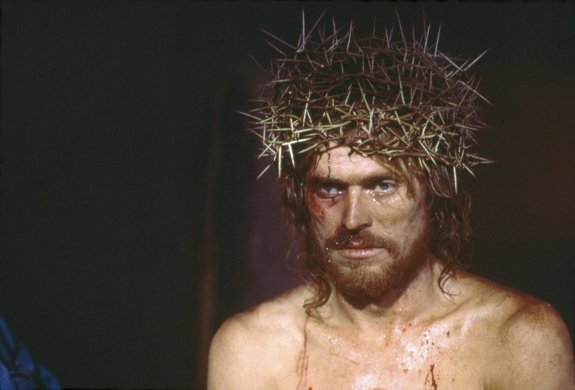
In honor of the current holiday, I thought I’d like a moment to reflect on one of the most emotionally charged films in my entire library – The Last Temptation of Christ. Filmed by Hollywood legend Martin Scorsese, this movie dared to take on one of the most violently hated novels of the modern era.

Based on the imperial book written by Nikos Kazantzakis, The Last Temptation of Christ tells us the beauty of the Gospel narrative through an entirely new and never-to-be-repeated manner. For that reason, I feel this movie has earned a tremendous cult attraction among thousands while also offending devout practitioners of the evangelical Christian persuasion.

Spiritually stirring, controversial, and heartbreaking; a masterpiece, pure blasphemy, and a faithful reflection of the hear of Christ himself. This single movie can claim all this and so much more.

Nolan Fans
image via Nolan Fans

But rest assured, faithful readers.  I may be a theologian, but this will not be a religious discussion. You have no worries of being evangelized to by this. I merely want to praise the daring work of a magnificent film, one that manages to stir the souls of believers and nonbelievers alike. Which, if we’re being honest, is one hell of an accomplishment.

Solemn. Celebratory. Triumphant!

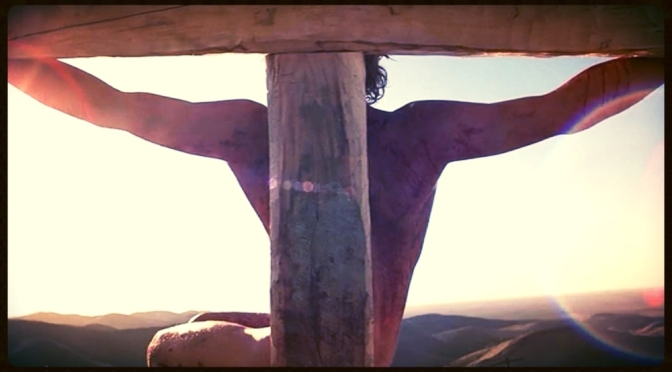
The journey of the Christ, as told in Scorcese’s daring vision,  instills a mighty swell of victory once we reach that final heart-pounding moment. It is a victory summed up with a humble smile and three sacred words.

“It is accomplished.”

Three humble words that split across the horizon of the human heart and declare the triumph of the soul across Time. They mark a place in History as deeply spiritual landmarks that have guided millions of souls. Only Scorcese could film such a profound moment, one the viewer’s been building up towards from the very moment the title screen glowed red.

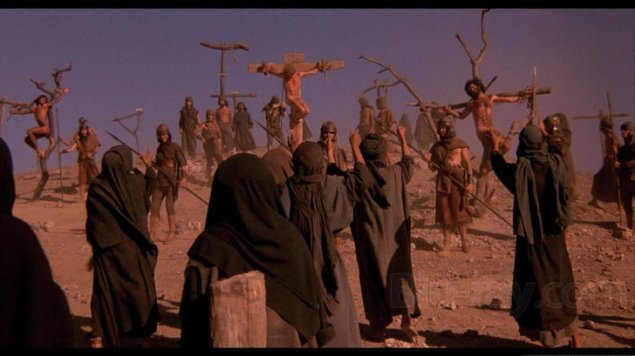
The pace of the film is a march, a defying-all-the-costs parade as Christ and twelve other individuals (who would have their names etched upon the pillars of mankind’s religious history) introduce a new and deeper faith to an ill-prepared world. This was ultimately a death march though, and no matter how many of them might try, there would be absolutely no wavering from that looming imminent finale.

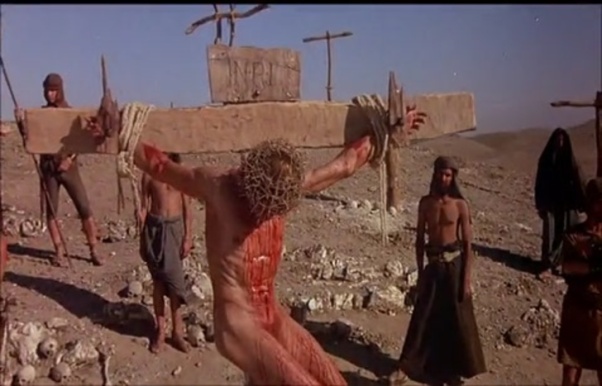
The march began with one single individual who inspires others, and they soon join and follow him. The march leads them to Jerusalem where, for a time, the following grows and becomes a multitude. But all too soon dwindles down to just four – the Christ and his three Apostles – in Gethsemane, and , ultimately, becomes only one – the very same one who started the movement three years previously, who will find himself beaten, abandoned, and alone to face death as he is lifted up, stapled between Heaven and Earth, the essential totem of Grace, a sacrifice for those he loves.

Blu-ray
image via Blu-ray.com

This is only some of the heart of Scorsese’s gripping masterpiece of love, death, and ultimately unyielding life.

In The Beginning

On the Criterion Collection’s release of the film, Scorsese admits he always wanted to make a big-time biblical epic about the life of Jesus of Nazareth. Originally, Scorsese says he was heavily influenced by the larger-than-life works of Cecil B. DeMille. With movies like The Ten Commandments in mind, Scorsese dreamed of matching that level of grandeur someday.

Scorsese also says he wanted it to be a black and white film, something that (I can only speculate now) would have looked like a Gustave Dore work of art come vividly to life. Undoubtedly that would have been breathtaking, but, admittedly, there already was a black and white Jesus epic out there – King of Kings, which is another Criterion Collection release.

Scorsese’s original vision for his future Passion work was later redefined upon seeing Pier Paolo Pasolini’s critically acclaimed The Gospel of St. Matthew. Yup, that means Pasolini, the director of Salo: 120 Days of Sodom, indirectly influenced The Last Temptation of Christ. The work of one fervent visionary sparked the inspiration of another and maybe there was something in the air, but people were just damn creative back then.

IMDB
image via IMDB

Scorsese changed his epic into a powerfully humble character study and focused that study on the Son of God. He didn’t have his core story until Barbara Hershey (Black Swan, Damien, The Entity) gave him a copy of Kazantzakis’ mystical novel and told him he needed to film this story, and (kindly) demanded to play Mary Magdalen, a role she fills dramatically.

The movie was a go. Paramount greenlit the work, but then the Moral Majority of America got wind of the project and threw a fit. The studio feared some very ugly protests and on Thanksgiving Day, 1983, Scorsese was told his Jesus movie was canceled. The film wasn’t even out the door and its protesters were already screaming blasphemy. Scorsese had to cut the budget back if he wanted his passion-project to see the light of day. Universal would later pick up the rights and the movie was a go once again. But people still fought it tooth and nail.

The Great Controversy

So was the controversy of the film justified? Honestly, the subject matter of the movie has always been a subject of controversy – Jesus. In the Gospel record itself, the Son of God is tremendously controversial. In Jesus, we have a Prophet who claims to be Incarnate God and vows to bridge the gulf between humanity’s soul and the divine by using only three nails and two pieces of wood. It is an outrageous claim, one only the God-Man could fulfill. Jesus does just that.  Society didn’t know what to make of Him. And, if we’re being real, society still doesn’t.

metacafe
image via metacafe

There is a definite idea of who the Messiah needs to be, and if that idea doesn’t match people’s preconceived expectations there is going to be an uproar. And an ugly one at that.

So is the film justifiably controversial?

US-SCORSESE-FILM-PROTEST
ucanews

When you have a Jesus film that opens with Jesus building a cross for another man to be crucified, yeah that is going to ruffles some feathers. Well, Jesus was a carpenter after all, and seeing him build a cross that will hang a man guilty of sedition is somehow amazing. This movie presents us with a Christ who is just doing his job. Before he was called Messiah he was just a regular guy making a living. Therein lies the key genius of this movie.

Christ was like one of us. He felt fear and then proved his strength by facing fear. In this movie, he didn’t want to be Christ, but he couldn’t deny being the Son of the living God. It’s a horror story in a way. Think of it: what if you woke up one day and learned God was your father? You were meant to be the Savior of all mankind, but in order to do that, you had to die as a sacrifice. Oh! And you couldn’t just die, but you had to be crucified, the most horrific and painful death invented out of man’s most heinous imaginations.

FictionMachine
image via FictionMachine

That’s scary! That’s the story behind Last Temptation. A Jesus who is God become Man. God, Eternal Almighty Jehovah, the I AM, become flesh, beautifully and wonderfully human. One of us, just like we are told in St. John 1:14. This film explores the sacred (and often overlooked) humanity of the Savior.

As a man, all he wants is to live a happy life. Marry the woman he loves, drink with friends and laugh in a good company. He wants to build a home and raise a family. He wants to kiss his grandchildren on the head and close his eyes in death knowing he has led a full life – just like a man. That is his greatest Temptation. The amazing drama of the Christ is the fact he is BOTH Man and God, so as a man he wants to live with those he loves, but as God, he must die to redeem their eternal souls.

IMDB 2
image via IMDB

That is the heart of this movie. It is real and raw human emotions springing from the Gospel record. I stress this is not the Gospel, and the filmmakers make that known from the opening title. But this is a celebration of the Gospel’s triumph.

I say that because I grew up in a home that discouraged me from seeing this movie. My parents were missionaries over in Russia, and so I grew up in a very religious home. We did watch religious-based films, but Last Temptation was on the forbidden list. This and The Omen were the top no, nos. Well, shit if those two films weren’t the very ones I had to see though!

I was expecting to see a gross depiction of my Savior, something that would mock up the Christian faith and damage any one’s personal belief upon viewing it. My first reaction though was admiration for how tenderly they depict Jesus. Willem Dafoe steps into the Messiah’s shoes (sandals) and presents us with a very real and very likable Christ. He doesn’t feel far away and distant, but all too real. Someone you could approach without fear of being denied. Before seeing this film, Dafoe isn’t a top choice I’d think of for such a role, but now I can’t imagine anyone else playing this pivotal part.

Criterion
image via Criterion

I can’t neglect to mention the other roles mastered in this film. As I said, Dafoe is wonderful for his part, but he is joined by some other titanic performances. Harvey Keitel joins us as Judas Iscariot, the man who will be forever marked as the Traitor of Christ. Unlike any other Jesus movie though, Judas is very close to his Rabbi. At times it feels as if he alone gets what Jesus’ mission has to be. The others are ready to take over all of Jerusalem and (eventually) overthrow their Roman conquerors. Judas, on the other hand, is listening and asking questions.

Cinema Viewfinder
image via Cinema Viewfinder

One of the most powerful moments from the movie transpires between both Jesus and Judas. Jesus knows his fate is at hand, that he must be crucified. He takes Judas aside and tells Judas that he has to be the one who turns the Son of Man over to the soldiers. Judas weeps when he realizes his role in this eternal epic is to ‘betray’ his Master.

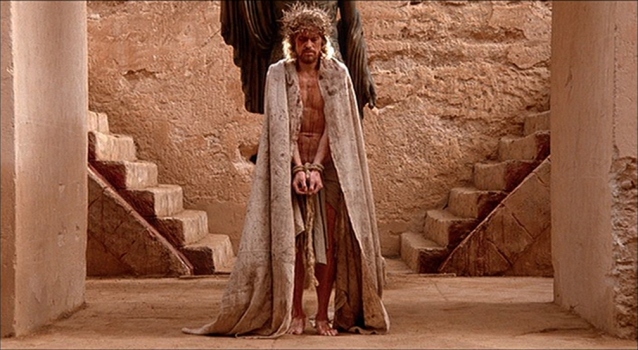
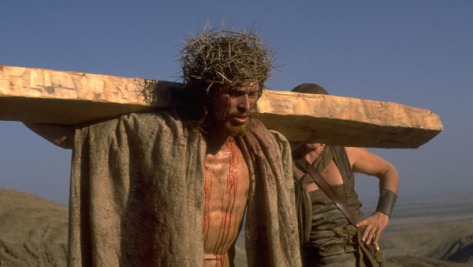
In a minor role (but incredibly impactful) David Bowie becomes our Pilate. His interaction with Dafoe’s Jesus was filmed in one day but you’d never know any different. “You’re more dangerous than the Zealots, do you know that?” he asks the condemned Christ with an air of cynicism in his gestures. The confrontation is short but it somehow lingers in our memory. It’s also a scene that then leads us into one of the most emotionally charged Passion scenes depicted on film. Peter Gabriel’s score, something that elevates this movie a hundredfold, simply outdoes itself during this entire painful process. When Jesus is shouldering his cross you’ll feel as though the weight of the whole world is on his shoulders.

Have a listen for yourself.

Finally, the movie is a work of art come to life. Scorsese admits that he used lighting to try and accentuate the visuals as best they could to harken back to some of the finest art of the Reni séance Age.

Final Thoughts

The movie is a masterpiece. It’s a Jesus story unlike any you’ll ever see. Sure, we all feel as if we know the saga of the Messiah, but this film does offer us a story angle we’ve never been introduced to yet. We see the heart of God through the humanity of Christ Jesus. This movie may not be the Gospel account, but it does manage to present us a lot of that self-same heart. Personally, this and Gibson’s own controversial film Passion of the Christ are two common staples to watch each Easter. Both movies offer my inspiration something unique, disturbing, and remarkable.

If you’ve not seen this movie (or if it’s been a while) let yourself taste a little bit of spiritual inspiration and give this one a watch. This has been Manic Exorcism. Have a Happy Easter, a Great Passover, and I’ll be catching you all soon enough. Try not to eat too many tasty chocolate bunnies. That’ll make you sluggish and too easy to hunt, and where’s the fun in that?