
In my humble lifetime, I’ve watched Godzilla rise from obscure campiness confined only to the most niche corners of geekdom to all-out and absolute imperial sovereignty. No longer is he restrained by critiques for bad dubbing nor is he looked down on for rubber suits or string-pulled modeled fighter jets. Nothing is wrong with any of those things; they still hold a marvelous charm and irresistible fun. However, and if we’re being honest, the G-fandom’s always-known Godzilla (and his compatriot Kaiju) always deserved to be much more respected.
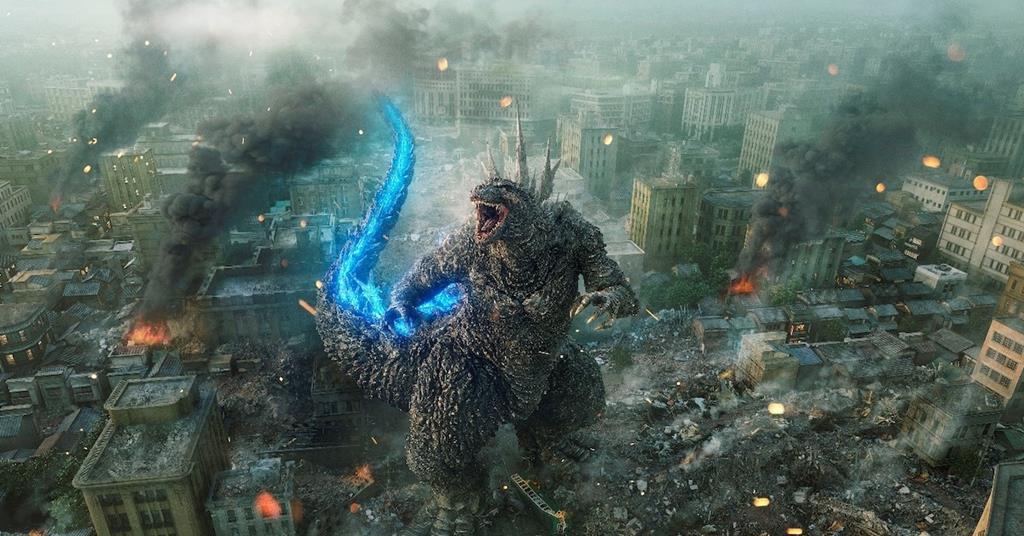
It is undeniable that we are currently living in an era where the King of the Monsters, Godzilla, has transcended the skepticism and thoughtless critiques that once surrounded him, and has now become a source of awe, terror, and wonder for the masses. The recently released movie, Godzilla: Minus One, provides clear evidence of the undeniable presence and power Godzilla holds over us all.

Not too long ago, being a fan of Godzilla came with a harsh stigma. I remember being made fun of at school for talking about the few Godzilla films I owned. At the time, Godzilla was exceedingly rare and people thought there was something wrong with you if you were a fan. That scarcity meant that many people weren’t aware of what they were missing out on, and it was easier to mock the thing rather than discover how amazing it could actually be. Even my art teacher in 2nd grade made fun of me for choosing to draw Godzilla as a project.
It was extremely difficult to find any Godzilla movie at a store during those dark days, so owning any of them was considered a big deal. K-Mart sometimes had one or two, but it was a matter of some fucking luck to find any. Once in a while, you could catch one on TV and record it. That’s how I got hold of Godzilla vs King Kong and Godzilla vs Megalon. But to own officially released movies? Get out of here. So imagine my surprise one fateful Christmas when Santa left me a shoebox under the tree filled with four (motherfucking FOUR) Godzilla movies! It made me feel rich beyond measure and gave me major bragging rights. We would borrow the movies around at school and with cousins and they were watched to ever-fucking death! My copy of Godzilla vs Mechagodzilla still holds up though.
How Things Have Changed
I went to FYE a few months ago and walked out with a Godzilla energy drink, a sexy as Hell Godzilla shirt (the very one I wore to see G:MO last night), and a Mothra chocolate bar. The store has dedicated an entire section to the King of the Monsters himself. They also had a Godzilla welcome mat I’m gonna have to get soon.
Not to mention how NECA Toys released just about any version of Godzilla you can think of. There’s even a crazy NES version of the character you can now display proudly on your shelf. I wonder how many people even played that game. It, the game, was another Christmas present one year and despite the Angry Nerd’s verdict I remember always liking it.
That’s not to discredit S.H. Monsterarts and Super 7 who both are releasing amazingly detailed Godzilla figures of their own.
The Criterion Collection released the entire Showa Era on Blu-ray and even though the collection is in a binder that’s too goddamn fucking tall for its own good at least they’re available right? All this is to say Godzilla is every! He can be found at your local Target, Barnes & Noble, and mall. I mean come on, can find the cutest mother fucking plushies of Godzilla, Mothra, and Ghidorah.
Our cup runneth over, friends. My ten-year-old self would be losing his mind over this kind of shit. I mean seriously, Godzilla reigns!
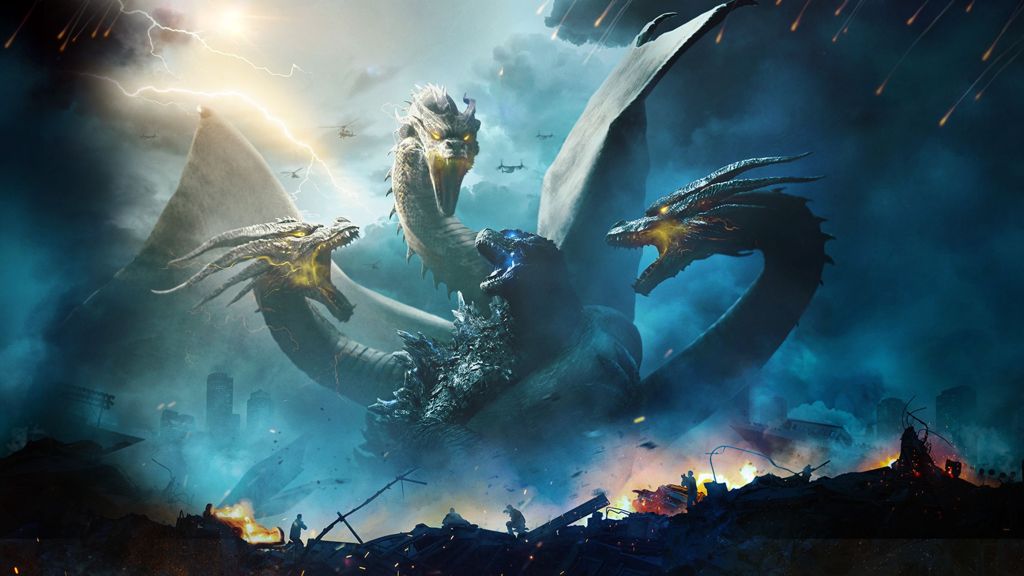
Legendary’s big-budget film (Godzilla: King of the Monsters) brought us one epic showdown between Godzilla and Ghidorah, and I was absolutely blown away. As a kid, I always knew Godzilla movies had the potential to be big, bold, and larger than life, and this film delivered on all fronts. I couldn’t believe my eyes.
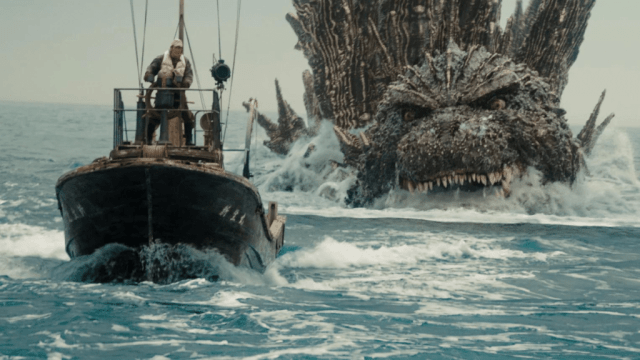
But that’s not all. A brand new Toho-produced (!!!) Godzilla movie opened this weekend. The studio that blessed us all with the Beast himself is back at doing what they’ve always done best. Word is it’s nominated for best picture too. A fact I’m not surprised by because I always knew these movies, if only done right, could reach this level of magnitude. After seeing the movie for myself I can’t stop thinking of the images given to me. It’s the best, the absolute best, Godzilla has ever been since the original film.
Godzilla’s gone above and beyond to solidify his titanic place in pop culture and is going nowhere. He’s here to stay.
So despite Godzilla’s current popularity, it is hard to imagine that the franchise was once discontinued and thought to be dead. In 1975, Toho released what was meant to be the absolute final movie and then pulled the plug on the series with no indication of ever bringing the iconic monster back to the big screen. By popular opinion, Godzilla had run his course and was done.
At that time, Toho was competing with the Gamera films, which had gained massive popularity among younger audiences.
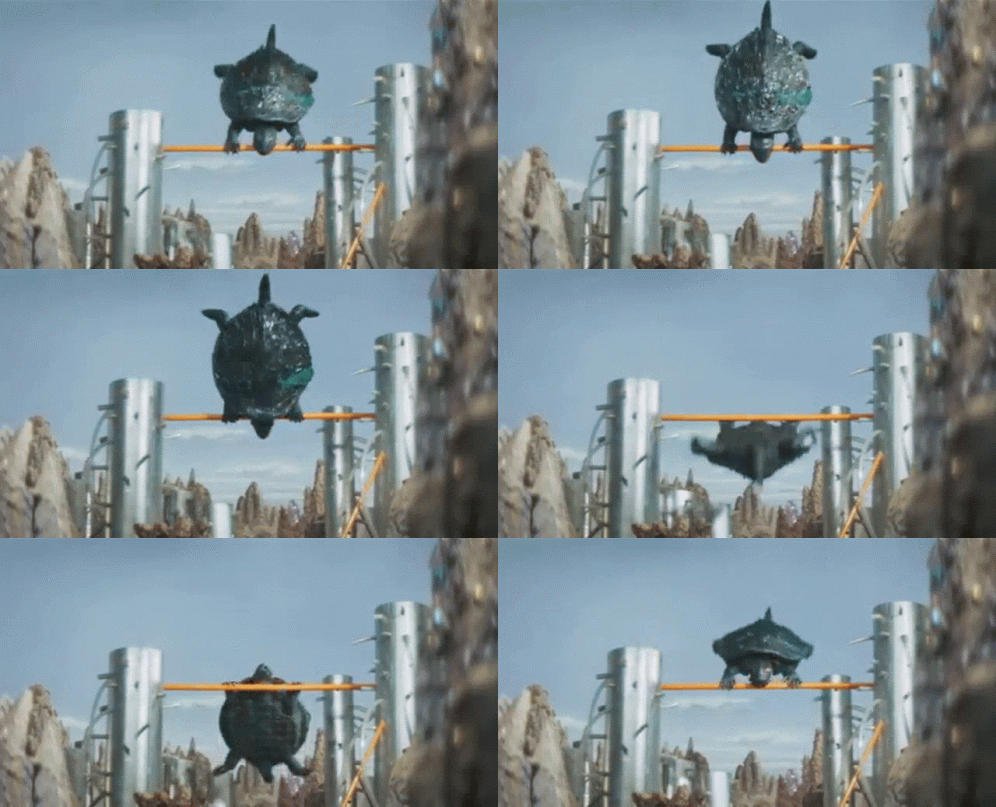
In response, Toho transformed Godzilla from a terrifying monster to a more child-friendly character. This new version of Godzilla was focused on teaching brats important values such as how to deal with bullies and the significance of recycling. Yeah, that’ll stick it to that flying turtle! Godzilla cleans up litter.
The character’s popularity was not decreasing, even though the campy and clownish tone of the story was becoming stale. The studio made the wise decision to take a break to allow their creative juices to flow again, as it seemed as if they had run out of ideas. This turned out to be the best decision Toho ever made, because what came next set the world on fire!

It seems like someone out there still remembered the original idea behind Godzilla. He was meant to be a symbol of man’s reckless misuse of atomic power, a force that could not be destroyed. He represented the dawn of a new era, an age defined by the eerie blue glow of atomic energy and all the terrifying consequences it brought with it. Godzilla was the ultimate monster of this brave new world, a horrific beast born from the ashes of human folly.
The Return of Godzilla (1984)
By God, it was time to bring Godzilla back and place him at the heart of the modern world’s current crises, that being the Cold War. The world stood breathlessly on the teetering brink of absolute annihilation as tensions mounted between the East and the West. The only thing anyone could think of at the time was The Bomb. How one small and insignificant mishap could spell the unconditional doom of all mankind. We stood in the shadow of the eleventh hour and many people were counting down the days till the inevitable happened. Possibly it was thanks to this apocalyptic atmosphere that helped restore Godzilla back to his terrifying roots.

In 1985, Godzilla was resurrected and brought back to the big screen, smashing its way into cinemas and capturing people’s attention. For the first time in my lifetime, a Godzilla movie was released theatrically, and it was this event that truly put the franchise on the map.
In this installment, Godzilla was stripped of his campy and comedic nature. This marked the beginning of a new era of films, which is also my personal favorite, the Hessei Era. And Toho wasn’t fucking around with this one. Godzilla was no longer the friendly creature we last saw. As soon as he emerges from a remote island, he begins wreaking havoc and destruction, leaving a trail of chaos and death in his wake.
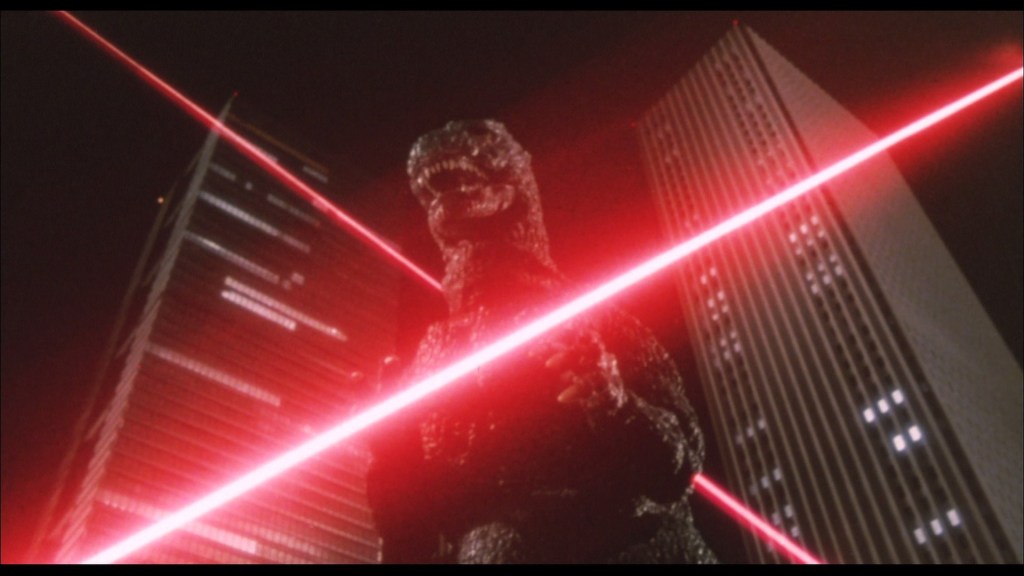
It goes without saying they chose a far darker tone that reflected the signs of the times. Viewers are first met with an emotionally charged and brooding score as the film opens setting up the whole feel for what’s awaiting us all. The atmosphere is heavy and threatening as the world of Godzilla 1985 appears to be locked in perpetual night. As far as Godzilla himself the iconic suit gets a massive upgrade in appearance. The big guy had never looked better, not since the original Gojira. As the first in a new saga 1985 got it right and right away too.
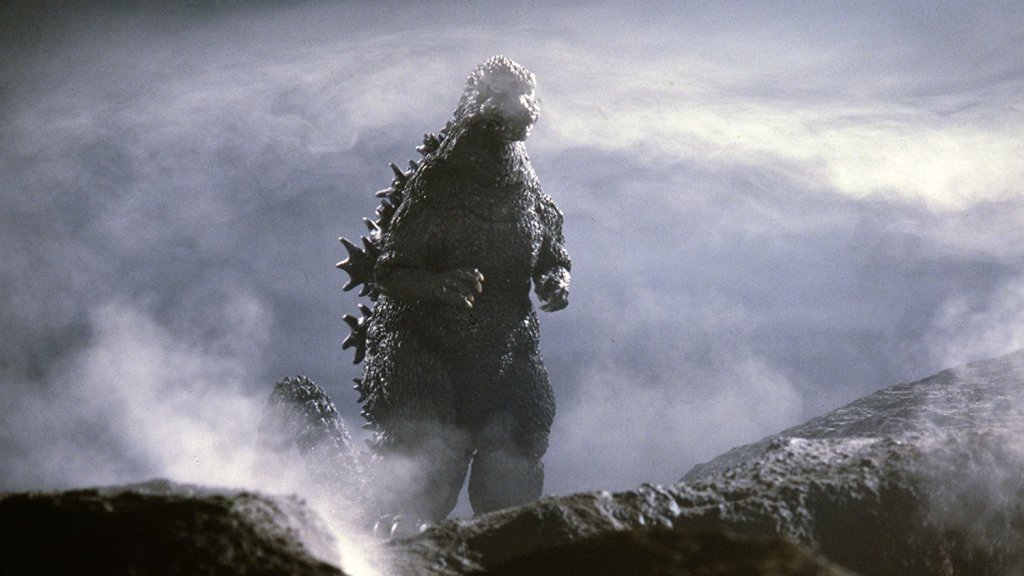
The movie, known as The Return of Godzilla in Japan, was released there a year before its Western release. It was considered a true sequel to the original movie, as Toho chose to disregard all the other movies that came after Gojira. A trend that’s no become common among movies released then on.
Godzilla immediately attacks a Soviet nuclear submarine, triggering a chain of events that further fuels the aggression of the Cold War. Ironically, it was the development of nuclear weapons that gave rise to Godzilla, yet these same weapons continue to be the primary means by which humanity seeks to destroy itself. Godzilla emerges from the earth like a mushroom cloud, laying waste to everything in its path. He is both the harbinger of the apocalypse and a symbol of Armageddon.

The movie explores the dilemma of whether to rely on nuclear weapons to destroy Godzilla or to keep them as far away as possible. The idea of using Godzilla’s own source of power against him is about as brilliant as punching yourself in the nuts to forget about your headache, but it puts the Japanese Prime Minister in a terrible predicament. Both the USA and the USSR urge him to use nuclear weapons to take down the monster, making his decision a difficult one. I”d hate to have his job the lousy fuck.
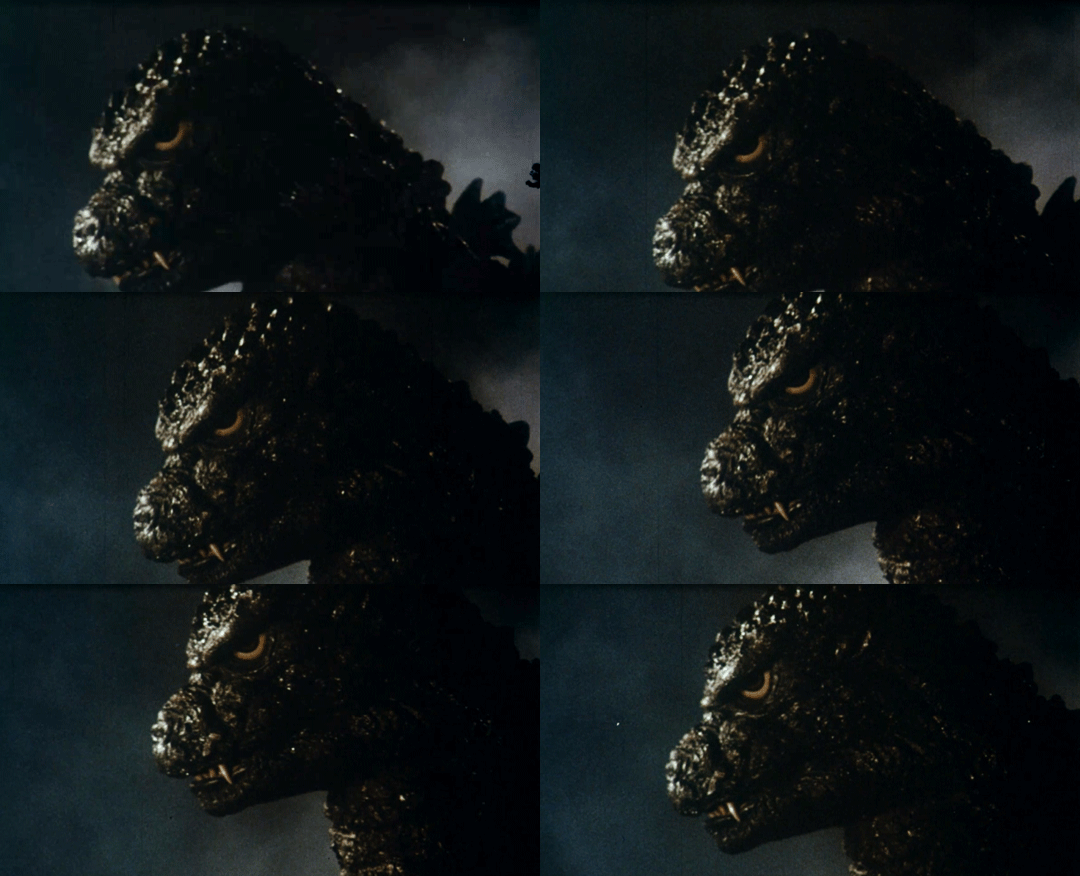
The film is far from perfect but it gets the job done. A common complaint is how it runs slow at times. I recently watched the original Japanese version of the film and, just like how the original Japanese release of Gojira is superior to the Western counterpart, this proved to be a much better experience. The Western version of 1985 has American scenes shoehorned in to (I guess) appeal to American moviegoers. These scenes add little to the plot and are jarring in terms of runtime. The original film, The Return of Godzilla, flows much better and doesn’t feel overly drawn out while it plays out the plot.
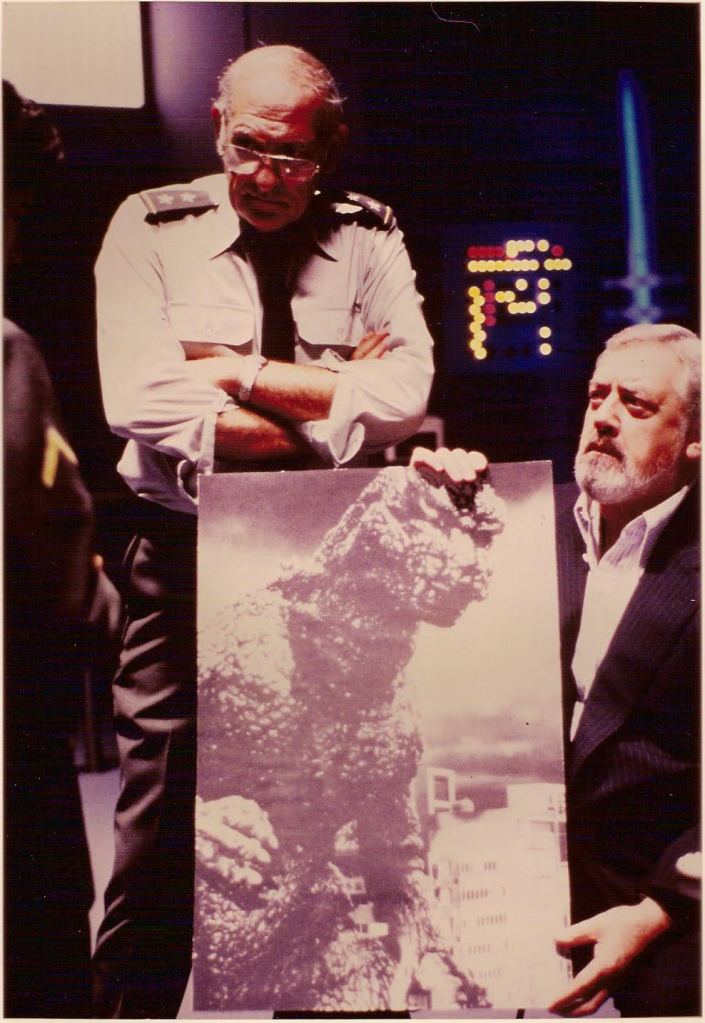
To Western fans, it might be nice to see Raymond Burr back reprising the role he had in Gojira. That’s a nice touch that adds some continuity to the story and makes it feel connected to the first movie. But I didn’t miss seeing his scenes when I watched the Japanese cut. It’s a matter of preference.
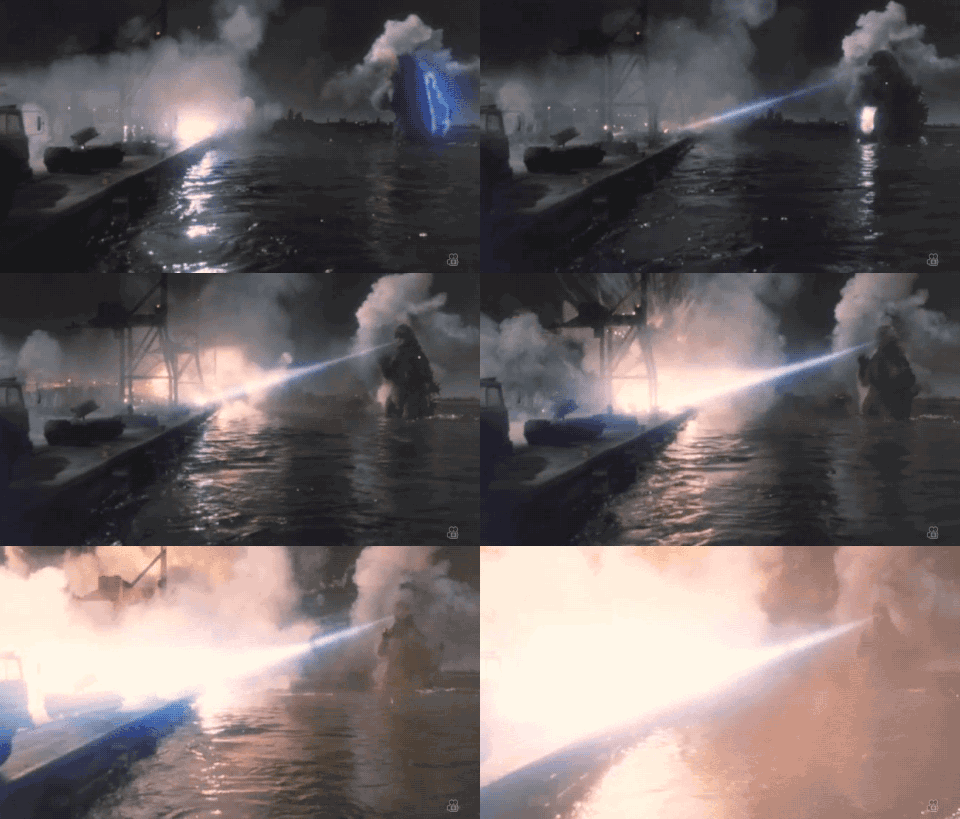
For the time this was my favorite Godzilla movie and remained so for a long, long time. I wasn’t aware Toho was making other Godzilla movies that followed the events of 1985. When Godzilla falls into the volcano at the end of the movie I cried. I was a little kid and Godzilla was my hero. He couldn’t die! And the end of the movie felt so final. Do I dare say it was operatic? I don’t know, but I know it played my emotions too well.
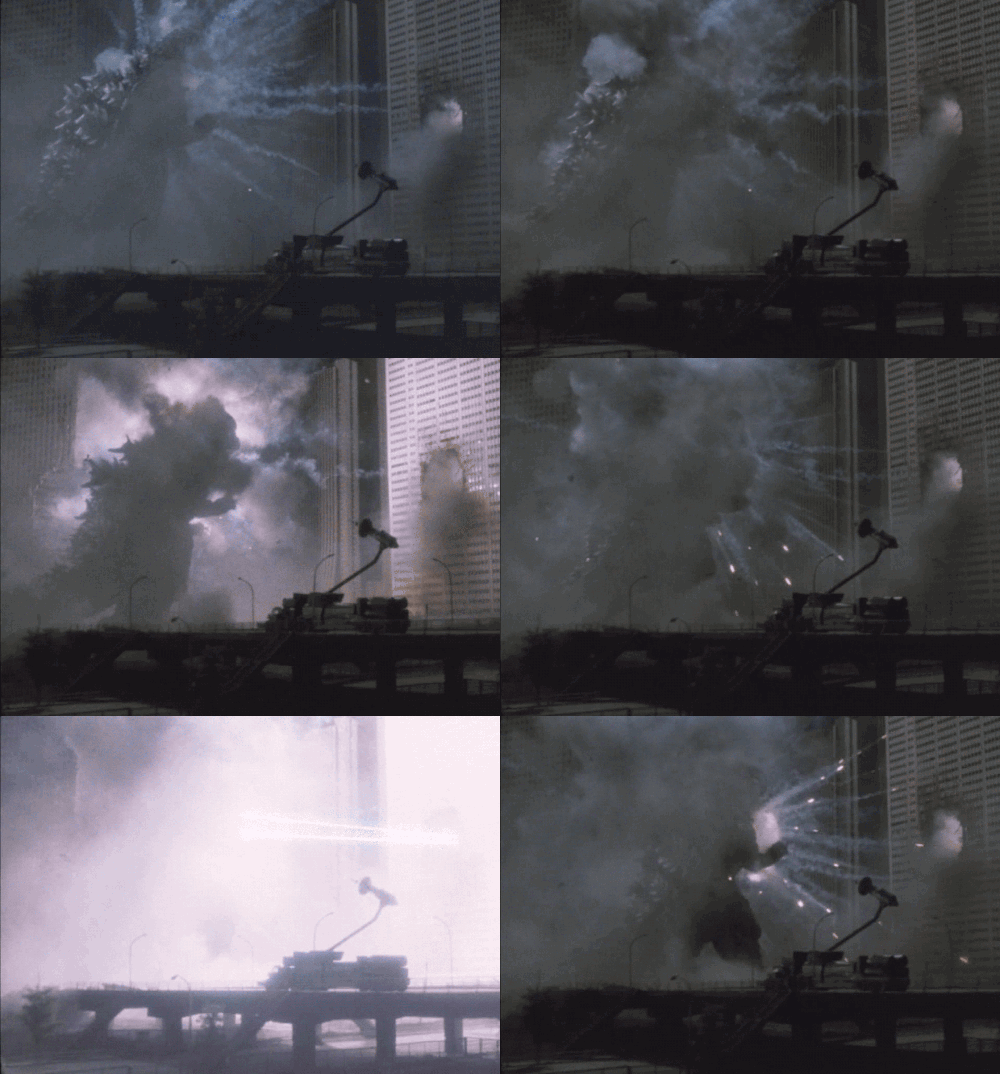
Another change I noticed in the Japanese cut – they know Godzilla cannot be destroyed. They lure him to that volcano at the end in hopes of burying him deep, deep into the earth’s core where he will be far removed from the surface world. The idea didn’t work because like I said there were plenty of movies to follow it.
Looking back, it’s clear that Godzilla’s resurgence can be traced back to 1985. The movie was a huge success and paved the way for the popularity that Godzilla now enjoys. It’s hard to say if we would have gotten the Legendary films if it weren’t for 1985. Would Toho have taken the risk to invest in more Kaiju films if 1985 hadn’t worked?

Although not perfect, Godzilla 1985 is a powerful film that demonstrates the enduring appeal of the King of the Monsters. It had a significant influence on many children in my generation, who grew up with the knowledge that Godzilla could not be defeated. They knew that the King of the Monsters would always return, time and time again.
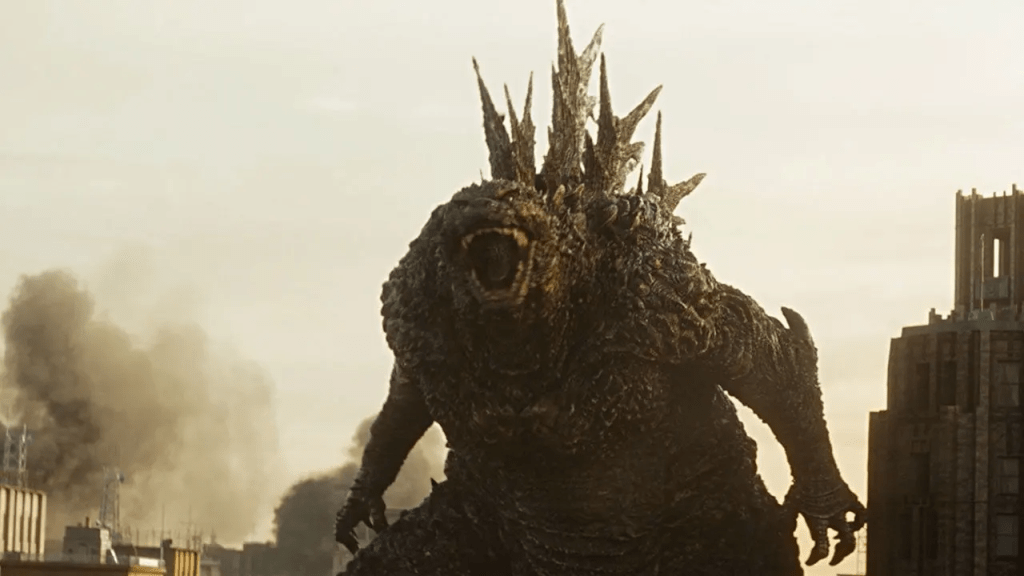
Now I’m going to go see Godzilla: Minus One as many times as I can! You all take care, happy holidays and…
LONG LIVE THE KING!
Manic out!
