All posts by Landon Evanson

‘ANNIHILATING THE WORLD BEFORE YOUR VERY EARS’: THE WAR OF THE WORLDS RADIO BROADCAST AT 85

“In the thirty-ninth year of the 20th Century came the great disillusionment…”

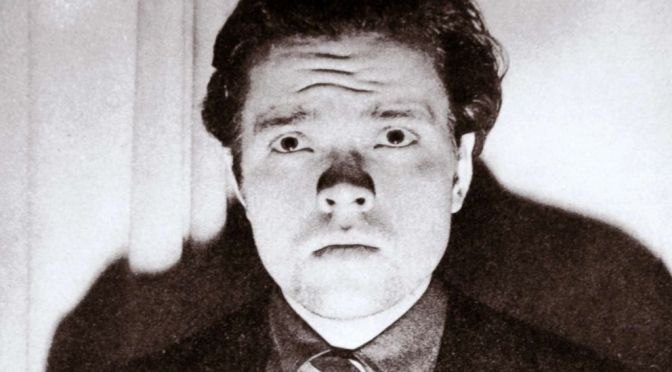
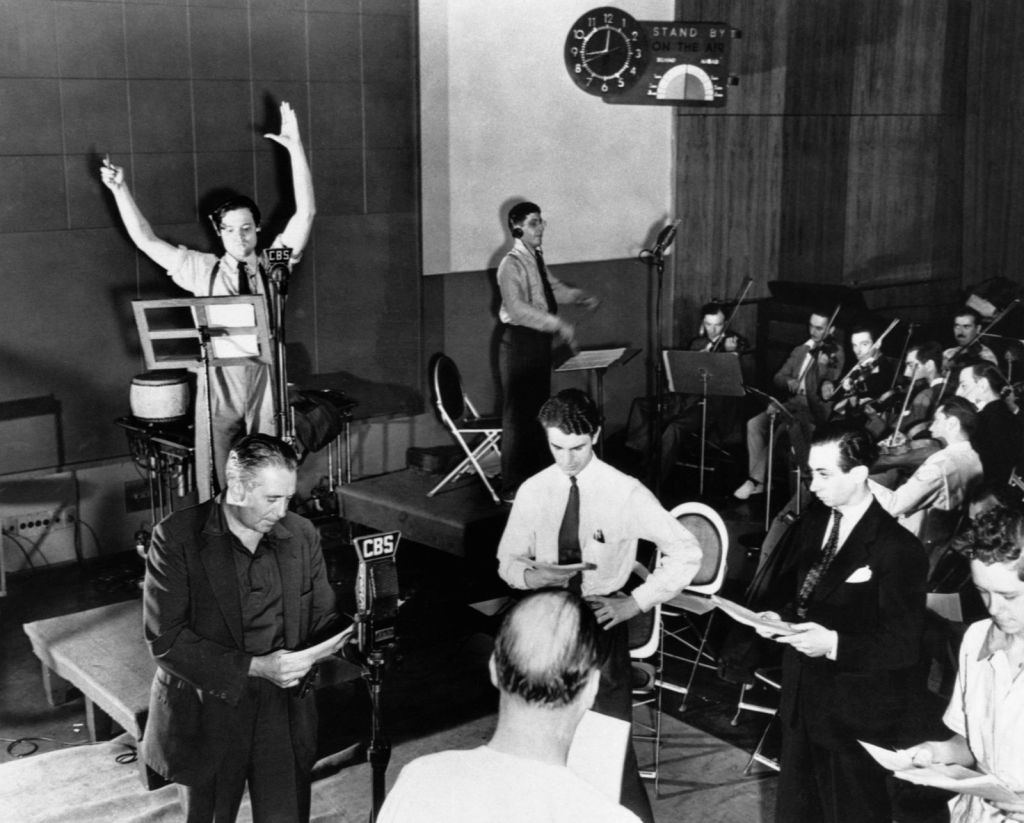
Tonight, when the clock strikes 8 Eastern Standard Time, it will have been exactly 85 years since The Mercury Theatre on the Air unleashed its version of H.G. Wells’ THE WAR OF THE WORLDS over CBS radio airwaves. Though the national panic resulting from the broadcast has been embellished historically, it made Orson Welles a household name and eight-and-a-half decades later, remains the coolest thing I have ever heard.

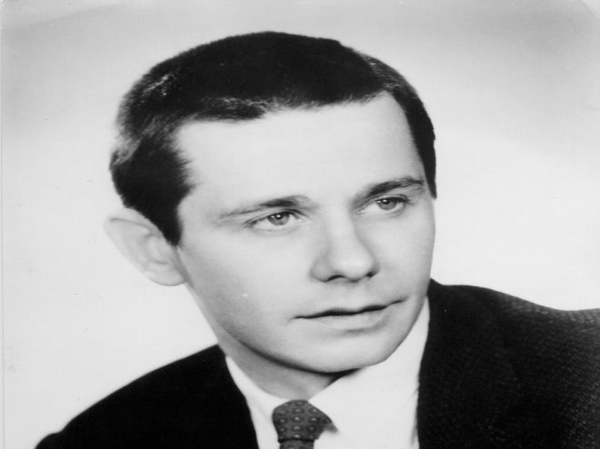
When reporter Carl Phillips (the brilliant Frank Readick) breathlessly relayed his observations from the Wilmuth farm in Grovers Mill, New Jersey, it didn’t require much effort to see how channeling Herbert Morrison’s coverage of the Hindenburg disaster the previous year could terrify millions. To my thinking, all it would have required was for someone to tune in a few moments late. Missing the program’s introduction was all it would have taken.

This was 1938. The Golden Age of Radio. It would be a lifetime before 24-hour news networks and social media would conquer our cultural landscape. So, when a reporter on the radio asked for a moment to get a better vantage point during a “news bulletin,” one would have been glued to the radio, nervously awaiting their next communication.

That’s when the magic happened.

After a brief piano interlude, with sirens blaring and the voices of uneasy onlookers murmuring in the background, Phillips re-started his transmission. Only a few words in, Readick–in a stroke of genius–tilted his head away from the microphone asking his broadcast partner, “am I on?” A subtle gesture that added incredible authenticity to the proceedings.

It wasn’t long before Phillips was talking about a small beam of light setting men in the field ablaze, frantically describing the jet of flame as it approached “about twenty yards to my ri…”

Dead air.

Eventually the studio host returned, the show progressed to its next stage, and later it should have been clear THE WAR OF THE WORLDS was all a radio play meant to celebrate All Hallows’ Eve. But the very instant the air went dead is a moment that quickens the beating of the heart to this day. One can only imagine its impact in the fall of 1938. It was Readick, not Welles who sold the program, however. The exquisitely simple act of looking away from his mic, and the mid-sentence cut to dead air was perfection.

When I heard THE WAR OF THE WORLDS for the first time, I was in college. Shortly after, I owned the broadcast on CD and even fashioned an Audio Production group project around those first fifteen delicious minutes.

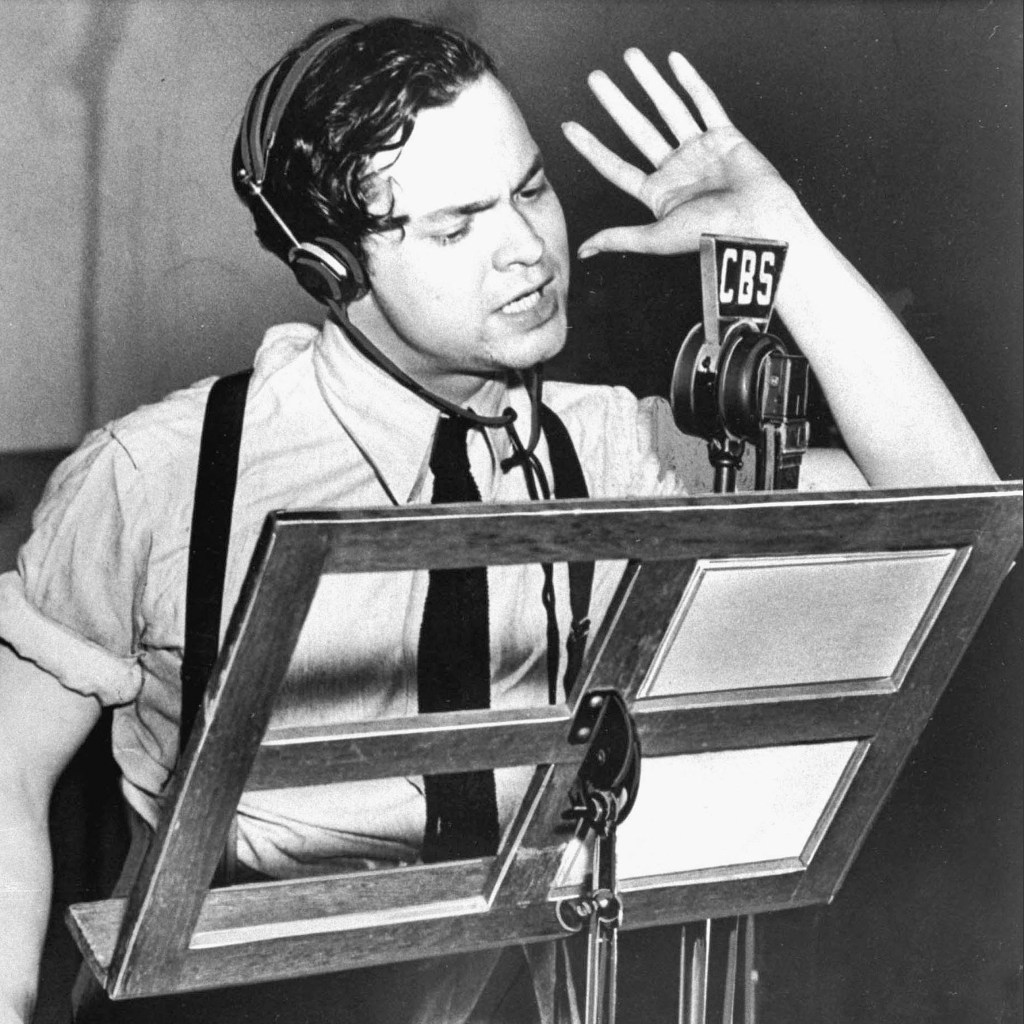
In fact, during the pandemic I made a return to radio and ordered a face mask featuring Orson Welles, sleeves rolled up and and arm held high as he intensely read the words from Howard Koch’s magnificent adaptation. And whenever anyone glanced at it and asked what it was, I gave them a quick “I can’t work in radio and not hype THE WAR OF THE WORLDS broadcast.” None needed further explanation — they just got it.

One could say that THE WAR OF THE WORLDS radio broadcast is 85 years old, but never could one claim that it’s 85 years in the grave.

Take it, Orson:

“This is Orson Welles, ladies and gentlemen, out of character to assure you that THE WAR OF THE WORLDS has no further significance than as the holiday offering it was intended to be. The Mercury Theatre’s own radio version of dressing up in a sheet and jumping out of a bush and saying ‘boo!’ Starting now, we couldn’t soap all your windows and steal all your garden gates by tomorrow night, so we did the next best thing: we annihilated the world before your very ears and utterly destroyed the CBS. You’ll be relieved, I hope, to learn that we didn’t mean it and that both institutions are still open for business. So goodbye, everybody, and remember please for the next day or so the terrible lesson you learned tonight: that grinning, glowing, globular invader of your living room is an inhabitant of the pumpkin patch, and if your doorbell rings and nobody’s there, that was no Martian — it’s Halloween.”

HAPPY ACCIDENTS: THAT TIME BOB ROSS DEFEATED DEADITES

To the glee of horror aficionados, Shudder’s CREEPSHOW is teeming with Easter eggs, and no episode filled the basket quite like the Season 2 debut chaser, “Public Television of the Dead.”

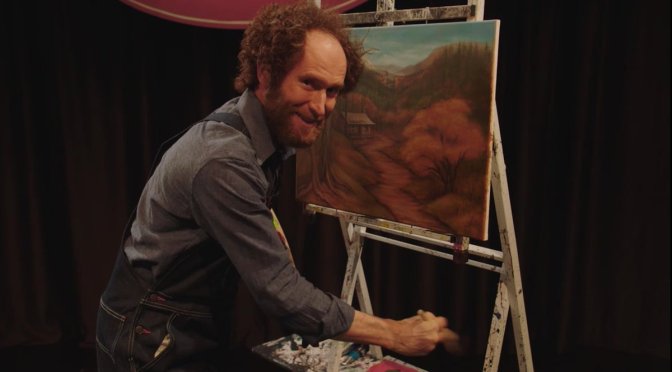
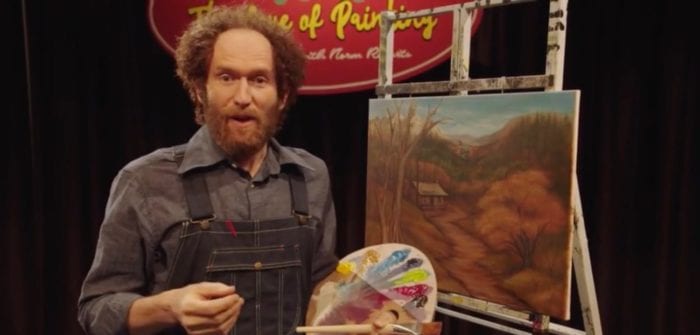
The set-up alone was intoxicating. A play on ANTIQUES ROADSHOW featuring EVIL DEAD veteran Ted Raimi querying about a book he’d had “in [his] fruit cellar for years.” Of course, Raimi was playing himself, the book in question was the Necronomicon, and the Pittsburgh-based station (hello Romero reference) even featured a program with a puppet named–you guessed it–Henrietta. When the host of THE APPRAISER’S ROAD TRIP began reading the “wretched incantations,” all hell broke loose. But in the next studio, a gentleman who struck a striking resemblance to Bob Ross was filming, not THE JOY OF PAINTING but THE LOVE OF PAINTING. Played to placid perfection by Mark Ashworth, the character of Norm Roberts was merely Ross’ given name rearranged: Robert Norman Ross.

Fresh off a floating and brilliantly delivered “pledge to us,” Raimi’s Deadite wandered onto Roberts’ set, and the calm craftsman immediately leapt to action, confronting Raimi with a cool “I don’t know who you are, sir. But if you’re not gonna behave, I’m gonna have to ask you to leave.” Battle ensued. From a 2-inch brush to paint thinner and making a Gattling gun out of a snowblower, Norm went full MacGuyver, utilizing the tools of his trade to decimate Deadites. “We’re gonna beat the Devil out of you.” To the surprise of no one, Roberts saved the day, and his show–which was slated for cancellation–went national.

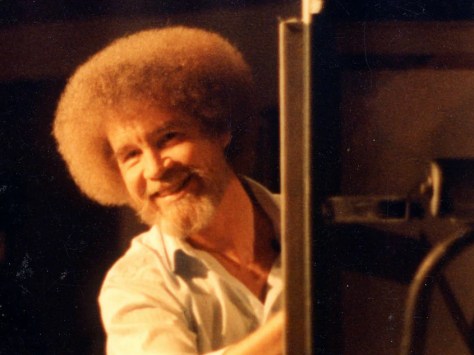
On its face, the premise of the episode seems outlandish, but it’s closer to the truth than you might think. The Roberts character was supposed to be a Vietnam veteran who fought on the front lines of the Tet Offensive in 1968, and believe it or not, Ross was a service veteran. Joining the United States Air Force in 1961, the not-yet-permed-painter was a medical records technician before being stationed in Alaska where he discovered a love for the snow and mountains that would inhabit so many of his works. Ross rose to the rank of master sergeant, but after acting as the heavy who was “the guy who makes you scrub the latrine, the guy who makes you make your bed, the guy who screams at you for being late to work,” upon discharge Ross vowed he would never raise his voice again.

Simply stated, “Public Television of the Dead” was a love letter to Ross. THE JOY OF PAINTING aired for eleven years (1983-1994) and thanks to its magical host, enjoys a cult following to this day. Bob Ross’ official YouTube channel has over 5.6 million subscribers as of October 26, and one episode alone–the Season 29 opener–boasts of 45 million views. And by the way, the color code for Van Dyke brown is #664228. If you know, you know.

Who among us doesn’t reflect on childhood afternoons watching in awe as Ross painted amazing scene after amazing scene, his words of encouragement and love a ray of sunshine acting as a soothing salve for the lashes of life. To this day, when I need a calm voice to help slow my mind so I can sleep, I pull up an episode of THE JOY OF PAINTING because Bob Ross was who we–and episode writer Rob Schrab–thought he was: a superhero.

“I think each of us, sometime in our life, has wanted to paint a picture.” For many of us, it’s because Bob Ross existed. The serene sculptor would have been 81 today, and as we celebrate the memory of someone who touched us all, we echo Ashworth’s Roberts: “good night, day. Thank you for everything.”

WHEN FANCY TALK IS ALL YOU HAVE

“If precautions weren’t strong enough you should have told somebody.”

“I TOLD EVERYBODY! Nobody listened.”

Ironic that HALLOWEEN purists overwhelmingly detest the Rob Zombie re-imaginings because something the polarizing filmmaker once said in an interview with WatchMojo.com perfectly encapsulates Samuel Loomis:

“You just have to go through life knowing you’re right and everyone else can go fuck themselves.”

Whether it was colleagues questioning his observations or local law enforcement scoffing at his warnings, Dr. Loomis (Donald Pleasence) found his assertions challenged at every turn. After all, why would anybody believe the one person who’d spent every day for fifteen years with Michael Aubrey Myers? Time and again the good doctor was met with “probably going” and “I have the feeling you’re way off on this,” but Loomis persisted because sometimes being a leader means having the strength to stand alone.

Sheriff Brackett (Charles Cyphers) referred to Loomis’ words of foreboding as “fancy talk,” but when you appear paranoid and desperate due to a lack of diagnostic evidence, describing the things you’ve seen over the course of a decade-and-a-half is the only weapon at your disposal. Call it fancy talk, but there was nothing fancy about the knot in Loomis’ stomach telling him that he was right.

In vain, Loomis shared those experiences–his fancy talk–desperate for someone, anyone to listen, much less believe him. Despite his efforts, Loomis was met with rejection. Tales of silent alarms and a blank, pale, emotionless face were met with “if you are right, damn you for letting him go” when Loomis was the only one trying to keep Michael Myers locked up, and certainly the only one exerting energy to stop the impending massacre.

But Loomis didn’t let the opinions of others hinder him. The determined doctor traveled the 150 miles to Haddonfield because 9-to-5 didn’t apply to The Shape. Loomis gave nary a thought to his career or reputation, and certainly didn’t allow the notion that “I tried, but no one believes me” slow him down because Loomis understood with perfect clarity the only way to safeguard the people of Haddonfield was to take matters into his own hands.

By refusing to relent, Loomis told every authoritative detractor from Dr. Wynn (Robert Phelan) to Sheriff Brackett to go fuck themselves. That Loomis’ actions proved unsuccessful is irrelevant because stopping evil incarnate in itself is an exercise in futility. What matters is that Loomis refused to quit without so much as an ounce of assistance from those equipped–and charged–with helping him.

In the end, that’s what has endeared us to Loomis for 45 years: his unyielding resolve to protect. Whether it’s a significant other, our children, siblings or friends — when the chips are down, we are all Dr. Loomis — stopping at nothing to protect those we love.

Was it Dr. Loomis fearlessly storming up the Wallace’s stairs to confront Michael Myers alone?

As a matter of fact, it was.