Category Archives: Creature Features

Creature Features: Facts and Trivia Behind The Special Effects of Poltergeist II: The Other Side

Whether you’re a fan or not of the follow up to Hooper/Spielberg’s 1982 paranormal pleasure Poltergeist, it goes without saying the special effects are spectacular and well-known throughout the industry as a majestic staple of the effects community. Hell, even the snooty Academy Awards recognized the visual terror of the film when it was nominated for Best Visual Effects during their 1987 award season.

While I can agree some of the plot points in The Other Side are a bit questionable, I’d be lying if I didn’t say it’s probably one of my horror movies period. Most of that credit goes towards Julian Beck’s portrayal of the malevolent reverend, Henry Kane; who basically traumatized a seven-year-old Patti into being terrified of old people for the next three years. Quite a feat and a legacy to leave behind as this was the actor’s last film role, and most likely, his most memorable. Just to refresh, Beck was suffering tremendously during shooting with pancreatic cancer and in terrible pain- which would account for his deathly appearance on screen and twisted look. It’s quite sad to think about it actually. However, at least we can take heart into knowing it wasn’t in vain as his character, at least in my own stupid opinion, is held in the highest regard as one of the most perfect villains’ in the horror universe.

I’m sure he’s smiling with his 10,000 teeth beyond the grave with that statement.

Tentacles seemed to be a recurring effect in the movie.  H.R. Giger, who provided the special effects designs, created several prospects but only two made it into the film, the vomit monster and “The Great Beast”. While I’m perfectly fine with these looks personally, some books on his art report that Giger was “very unhappy” with how his designs were translated to the film.

Before we get into the obvious scenes you’re expecting to see here, there were some other simple things like a dream sequence in which Diane is pulled into the ground by rotting skeletons, or another quick shot of dozens of ghostly spirits appearing all over the lawn that weren’t as recognized but looked visually stunning on film.  Then there was the part where Stephen and Taylor are having their warrior session and the smoke attacks him before entering his nostrils. And of course, the creepy toy scene where all the kids’ toys are possessed by Kane and his minions.

The movie was at one point to have been filmed in 3D. Several scenes such as the appearance of the Beast and the cheesy flying chainsaw during the garage escape were filmed to take advantage of the process. This idea was eventually abandoned after seeing the failures of other gimmicky 3D horror films of the decade such as the likes of Jaws 3-D (1983), and Amityville 3-D (1983), which were previous flops for studios. Speaking of the garage scene, it was originally written to have the infamous clown doll come back for a scare, trying to smash its way through the car windows! Even more cheesy? Maybe. But I’m ok with saying it would have been the most awesome cheese.

Those are all notable mentions, but the effects in the film really kick off with attack of the braces! The orthodontic horror kicks off the tentacle special effects theme throughout the film with poor Robbie getting nailed to a ceiling in a cocoon of metal thanks to his dental genetics.

Boss Film Studios, namely Richard Edlund, John Bruno, Garry Waller, and William Neil, was the design company handling the effects. They animated the magic through a mold that was placed over actor Oliver Robins’ head. The team placed straws inside the kid’s nose so he could breathe properly and a device attached to the mouth that would shoot out the metal tentacles through a remote. In the original script, Robbie was to be attacked by bees. However, the actor noted he had a debilitating fear against the insect. So hence, we get this glorious scene instead.

Moving further down toward tentacle terror, is the most recognizable scene from the film- The Vomit Creature. Kane was able to get into the house by possessing the worm in a bottle of tequila.  When Stephen swallowed the worm, it possesses him briefly until his body rejects the evil spirit. Out slithers this huge, slimy, H.R. Geiger inspired creature that quickly grows into a legless ghoul resembling the preacher.  That part was pretty horrifying.  It continued to grow until it resembled a massive column of evil, complete with monster claws that lifted Stephen off the ground; and then scare it off with that warrior smoke!

The creature, played by Vietnam veteran Noble Craig, was a triple amputee due to his war services. However, Craig is unsung in the horror community as playing multiple roles you might not even know about! Such as what is credited as “The Puddle Soldier” in 1988’s The Blob, “The Sewer Monster” in Big Trouble in Little China, and one of the very few people who got to play Freddy Krueger on the big screen in Nightmare 5: The Dream Child; in the scene where Freddy is bursting out of Alice’s body- that’s Craig.

The final few minutes of the film encounter the vomit creature Kane in it’s final form- The Great Beast. Unfortunately, the battle with the beast was originally much longer as with the rest of the film (a full forty minutes is said to have been cut from the movie), but nonetheless made its impact.

On the script sent to HR Giger, there was a scene in the entrance to the other side that involved a tunnel made with arms, bones and worms; and the Great Beast evolves into a massive living landscape that covers the other side. Which would have been cool to see but I’m guessing production budgets were an issue here. The ‘Beast’ itself was apparently a nightmare build for the team; so I suppose he sure does live up to his name.

Now, those are all fine concepts that looked great on film. But the most horrifying scene for me, was this goddamn transformation of Carol Anne becoming one with the beast.
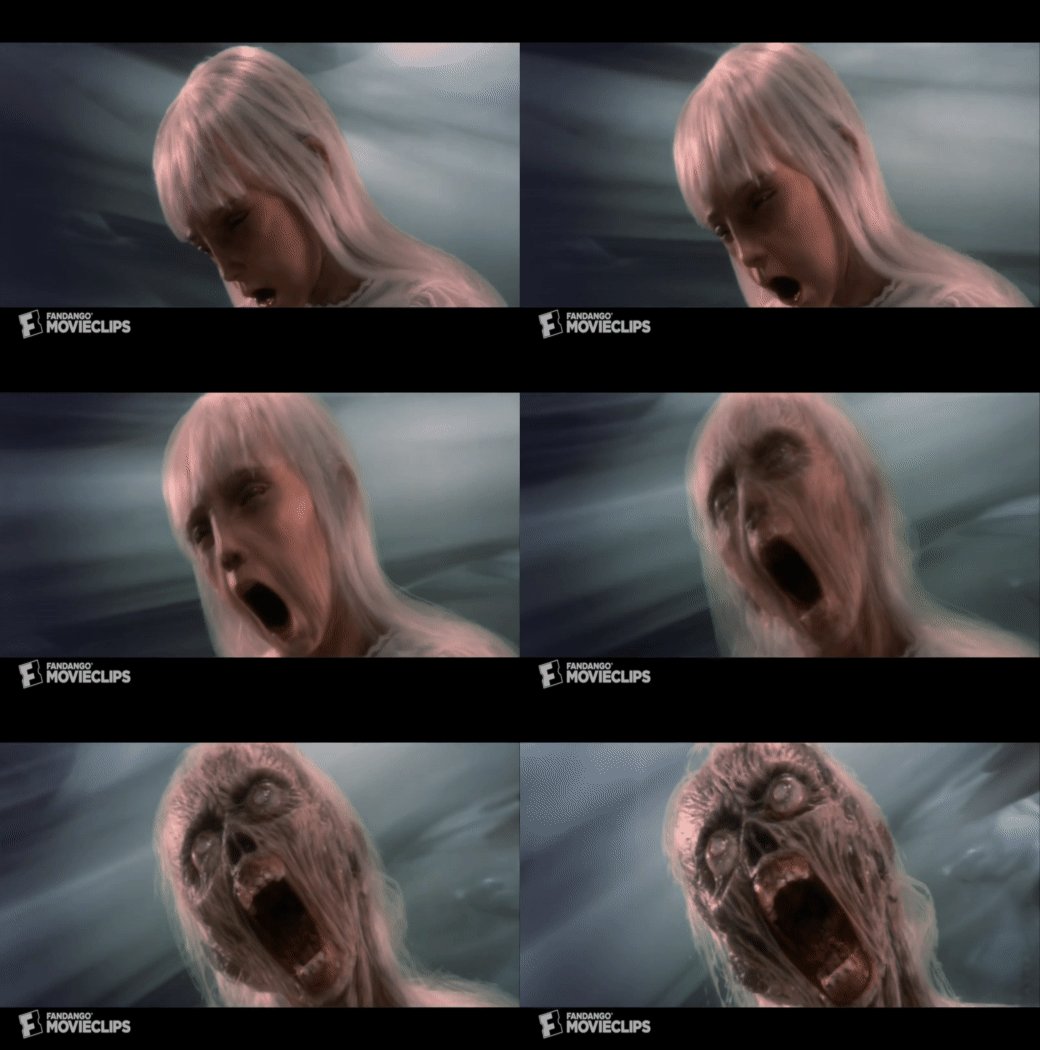
And for the record, this just as creepy prop is the restoration of the Carol Anne bust that was partly used in that scene.

Tom Spina.com

FRANKENSTEIN! The Imperial Legacy of Mary Shelley’s Immortal Monster

“I have love in me the likes of which you can scarcely imagine and rage the likes of which you would not believe. If I cannot satisfy the one, I will indulge the other.” – Frankenstein, Mary Shelley

The limping Phantasm of a new horror bristled across the dreamscape of a young woman’s darkest imagination. The misshapen Thing beckoned to her, demanding concession for its own hideous sentience; demanding to be recognized, the Creature rapped its corded fist of scars and confused tissues against the smoky glass that separates our waking world from the shadow realm of sleep, shattering the delicate veil, and roaring to be brought through to us. From nightmares, the Thing of death called out to to be brought to life and she granted it entrance. 

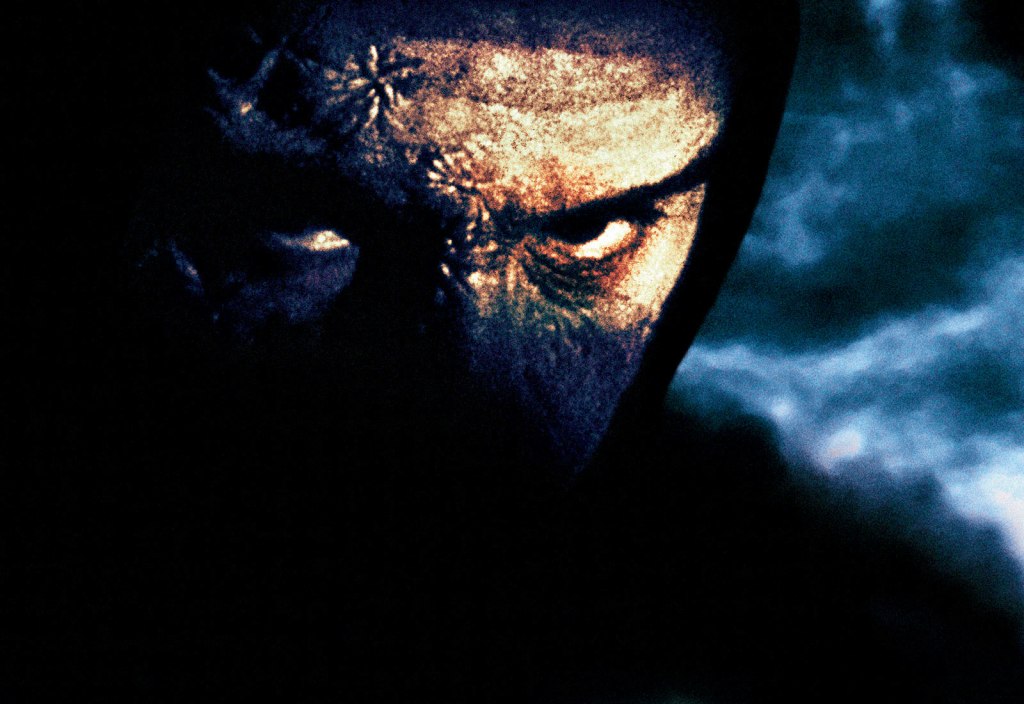
image via TriStar, ‘Mary Shelley’s Frankenstein’

Much like her obsessed titular character, Mary Shelley was on her own quest to bring life to things wrought from fretful dreams. She admits to having seen a terrible shadow pass along her room one night, a thing shown but only briefly by a searing flash of blistering light. Her Monster, her own very personal demon, was brought to life before her eyes by the lightning. 

That nightmare left an imprint on her soul.

A fitting origin to what would become her horrific masterpiece! 

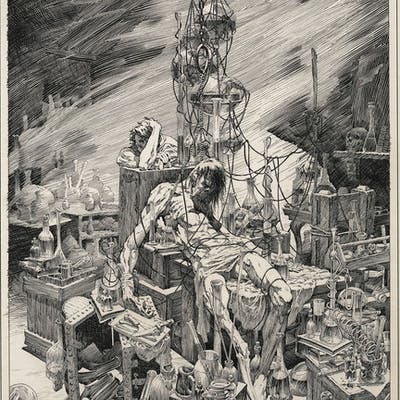
Bernie Wrightson, ‘Frankenstein’

How I, then a young girl, came to think of, and to dilate upon, so very hideous an idea? – Mary Shelley

A marvelous question, but asked by a writer of titanic skill. Be warned, dear reader, when a writer has a marvelous question many dark little horrors can be given shape from it. 

Example: a young father had moved his small family to a new home, a home just a little too (precariously) close to a busy road. This father just barely caught hold of his young boy who, as little boys do, run very quickly and take little heed to the dangerous world around them. The toddler’s quest to cross the road was stopped and the father held the lad to his chest as a truck, all eighteen wheels roaring, flashed down the road before his eyes. A truck that surely would have made quick and gruesome work of a tiny boy such as his son. 

The father thought, “What would have happened if I hadn’t been quick enough?” Oh, did I mention there was a pet cemetery out in the woods behind their house? 

You see, those are the questions that keep us writers up at night. The only way to expel them is to share them, and I believe that’s exactly why gods and devils disturb our thoughts and rest. We are unwilling ambassadors of the dark world. What scares us shall surely frighten you too. 

It takes a marvelous question and then, with time, a whole lot of obsession. 

The Art of Obsession 

Perhaps it’s the curse of our times but few truly understand the need for wild obsessions. I mean the pang of desperation. I want writers to have a deep-rooted passion for their craft, not to make money (though who can bitch about monetary gain?) but to release demons, horrors beyond time and space, and to break taboos without ever feeling the need to apologize for the black miracles they’ve unleashed upon the world. 

image via dmdave

That’s the kind of obsessions I mean. The kind we’d all be locked up for if we should ever dare explore them in real life, but, vicariously lived through the monsters and madmen we unlock while writing. 

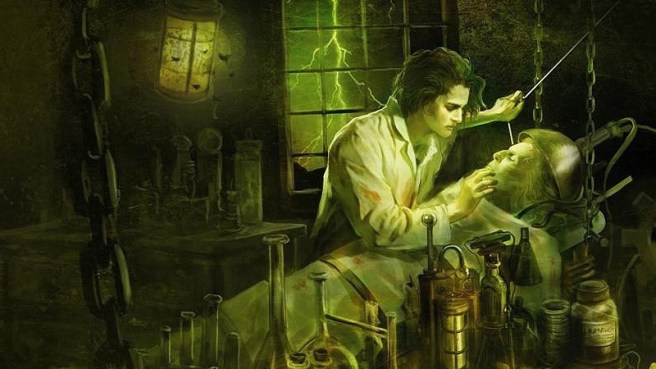
“I saw the pale student of unhallowed arts kneeling beside the thing he had put together. I saw the hideous phantasm of a man stretched out, and then, on the working of some powerful engine, show signs of life, and stir with an uneasy, half vital motion. Frightful must it be; for supremely frightful would be the effect of any human endeavour to mock the stupendous mechanism of the Creator of the world.” Frankenstein, Mary Shelley 

image via frankensteiniablogspot

Each word is poetry begotten of the macabre, stitched together in such eloquence that we cannot turn our eyes away. Imagine not knowing the story! Imagine the sickening thrill of the slightest twitch of the creation’s finger. Readers howled and screamed upon first reading Shelley’s gothic horror masterpiece. 

A masterpiece about death but brimming with, although nefarious as it may be, life! It’s been told and retold across the generations as new horror fans come to know the name of Frankenstein, a man who dared to play as God. 

Inspirational Evil

Mary Shelley was not ignorant of the questionable practices, or shall we say, abominations committed all in the name of science of her day. It was a well-known secret that educated men blatantly combined alchemy with the practice of medicine, and, most importantly, the Occult was often employed to further their maddening pursuits. Doctors were driven by the devil himself to unravel the mysteries of life by invading the taboo of death. 

Graves were robbed. Cadavers were stolen. Experiments to envy the lectures of Hell were practiced. Such things were not unheard of and became haunted gossip among social gatherings. It all boiled down to this: Could a man create after his own image?

art by Bernie Wrightson, ‘Frankenstein’

Reality and fiction are very thinly divided and sometimes the two cross over. 

So what if it could really be accomplished? Among these bodily pieces of dead men’s tissues, organs, limbs, and bones, what if, out of a thousand efforts, one single man proved more driven than his peers? What if one manic student reached into the shadow of death and pulled something out? 

“If I cannot inspire love, I will cause fear!” Frankenstein, Marry Shelley

Shelley dared explore this phantasmal taboo and wisely included her own personal trauma to weave together an immortal tale that will outlive us all.

There’s a reason the story stands the test of time.

Shelley’s Grim Philosophy

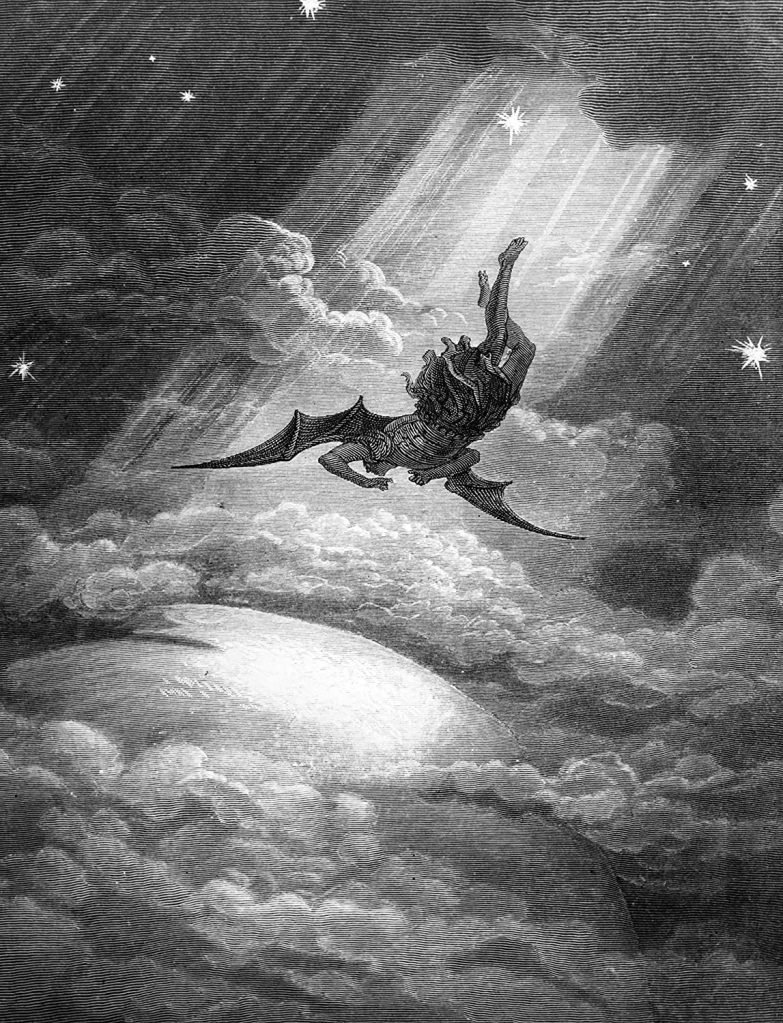
Another inspiration for Frankenstein came from one of Mary Shelley’s favorite tales, John Milton’s Paradise Lost, an epic depiction of the Genesis account and Fall of Lucifer. Hints to the poem’s immediate influence over her thoughts can be spotted across her own epic tale.

art by Gustove Dore, John Milton’s ‘Paradise Lost’

God made Man in His image and that image turned to Sin, brother murdered brother, and, in time, wars left corpses outside the guarded gates of Paradise. 

That was the result of a created being made after the image of God. So, what tremendous malevolence can be expected from a thing made after the image of (fallen) Man? 

“I ought to be thy Adam, but I am rather the fallen angel…”
― Mary Shelley, Frankenstein

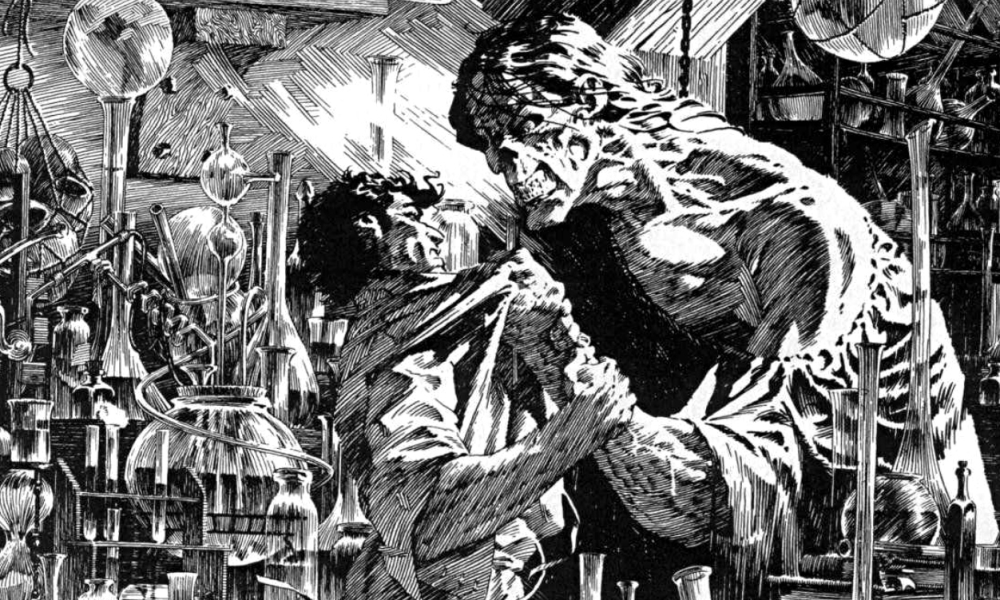
art by Bernie Wrightson, ‘Frankenstein

Victor Frankenstein stood to lose everything for the sake of his creation. The story is a tragic narrative of a weary man whose wick has not long for this sad world. His youth was eaten up by the sorrow gleaned by his own hands. He dared to play God and so finds himself utterly God-forsaken and damned at the story’s end. He is pursued by his Creation to the very end of the world where nothing but ice and barren landscapes are found. 

Frankenstein’s story is a brutal cautionary tale for the ages. Grave robber, thief of death, madman, scientist, and creator of monsters. But who is the true monster in the story? The Creation did not beg to be a new Lazarus. The Creation was given life unwillingly and then abandoned by his own father. 

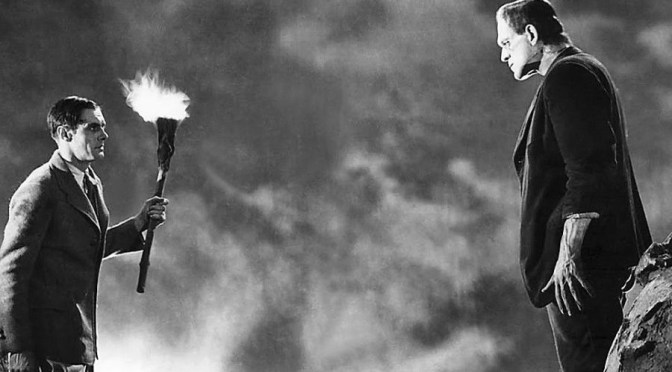
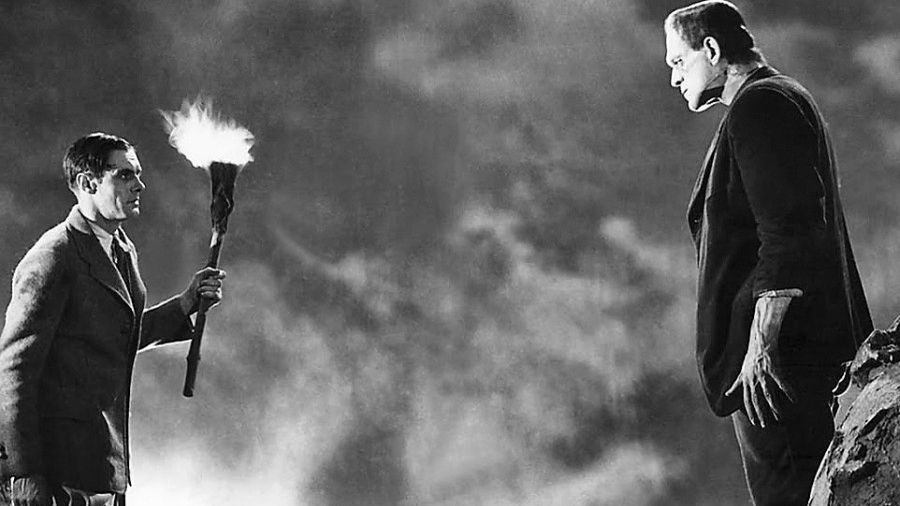
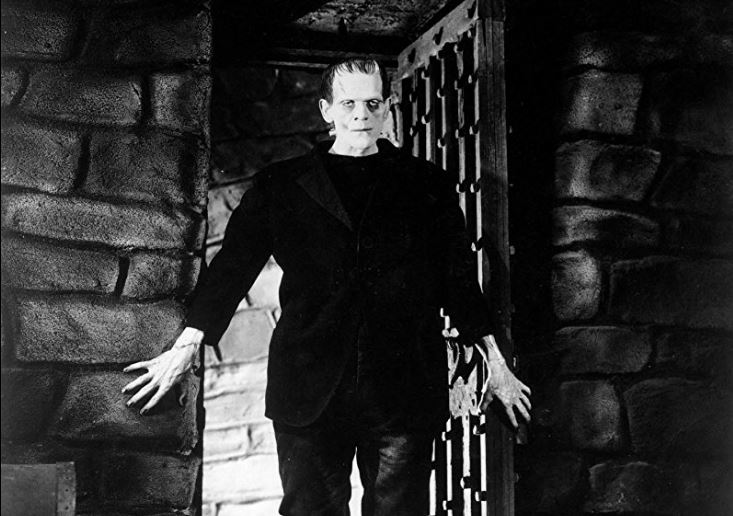
gettys images, ‘Frankenstein’ by Universal

True, it was the Monster’s hands that ripped, tore, strangled, and left a trail of carnage and tears. But it’s to be argued that such an abomination would never had the chance to lay a single finger against anyone had Frankenstein not created him. 

“It is true, we shall be monsters, cut off from all the world; but on that account we shall be more attached to one another.”
― Mary Shelley, Frankenstein

The Creation does go on a glorious rampage to punish Victor Frankenstein for the unwanted curse of life. The Monster, as we call it, kills everyone Victor loves until only the graying husk of a man is left of the bright student from Geneva. 

image via McFarlane Toys, ‘Frankenstein’

So it is a story of Ouroboros, the snake ever eating its own tail. And in like manner, Frankenstein is an eternal story that will outlive us all. Even as the worms devour this flesh the Creation of the madman will continue to haunt the world. 

Creating Monsters!

Dear reader, let’s talk about now. If Shelley teaches us anything from her personal life it is to never ignore the germ of an idea. Oh but especially a hideous idea; a creeping, howling, malignant idea birthed out of nightmares! 

How many horror stories are being ignored right now? How many good scares are we being robbed of just because you haven’t written it? Mary Shelley didn’t set out to make a world-wide phenomenon. She just wanted to scare her friends. So that’s a really good starting place. Scare the people closest to you. And never, ever give up.

image via Universal, ‘Frankenstein’

Your idea could happen while you’re on a walk. It could make itself known while you look out the window, or pick up a coffee. You might have to put aside the internet a little bit because writing demands time and attention just like Frankenstein’s Creation. 

Hunchbacks in bell towers, Ghosts haunting Opera Houses, Vampires in Transylvania, men who go invisible, a masked horror that rises from Crystal Lake, a dream demon who haunts nightmares, a puzzle box that opens Hell, a psychopath who invents torture traps and leaves his victims to make the ultimate choice to live or die. 

Monsters are out there, and there are so many of them, but guess what? There’s even more not yet discovered. Are you willing to be possessed by a need to tell a story? I for one would love to read it.

What are your fears and nightmares? What monstrosity might you end up stitching together? Piece by piece, stitch by stitch, nightmares tied to social anxieties, and powered by the engine of your own dark influences what great terror might we expect from you?

Dracula! Bela Lugosi’s Dark Spell

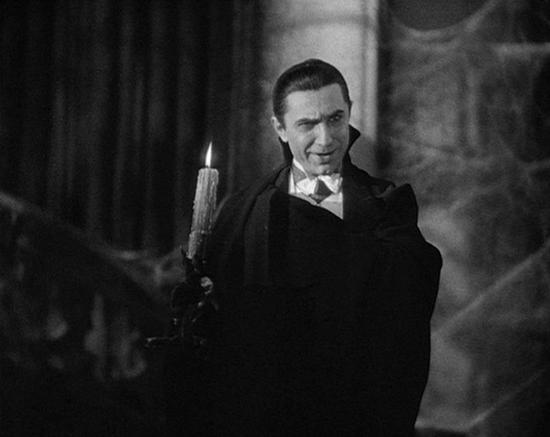
In honor of Bela Lugosi’s birthday (A day late I’m afraid, but better late than never), I’ve sat down to treat myself once more to the fantastical whimsy of the horror film that really started it all, Dracula. No denying the German expressionism films were the pioneers of horror cinema, but Dracula was the very first ‘talky’ horror film. 

The fog crowded scenes and hypnotic visuals of the Count’s foreboding and far-away realm could now be heard as well as seen, and they used sound to their advantage for this eerie new project. Rattling carriages drawn by horses, creaking doors, and hissing bats. Audiences sat dumbfounded by all they heard. It brought the night-shaded horror of Transylvania straight to them. And there was no escape. Horror had entered a brave new era.

There was no going back. Dracula opened a secret door and a monsoon rush of sensational horror films has flooded through ever since. 

From the cracking whine of a camera in Texas Chainsaw Massacre, the tolling of the bell in Hellraiser, a sing-song lullaby in Nightmare on Elm Street, and, last but certainly not least, the iconic sound Jason makes all stand out in our blood-splattered minds. These sounds immediately take us back to the chills and thrills of the films and are as iconic as the monsters we love.

Dracula began it all.

It’s so easy to get wrapped up in each little minute detail of the film, but I’m no expert on the matter, just an avid fan. Somehow rewatching it this time around reminds me of the first time I ever sat my butt down to experience this macabre treasure. 

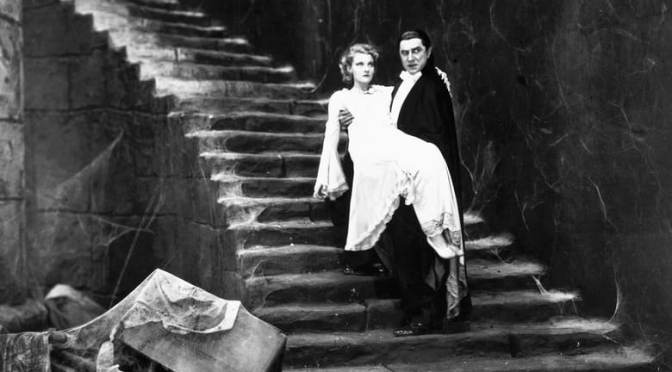
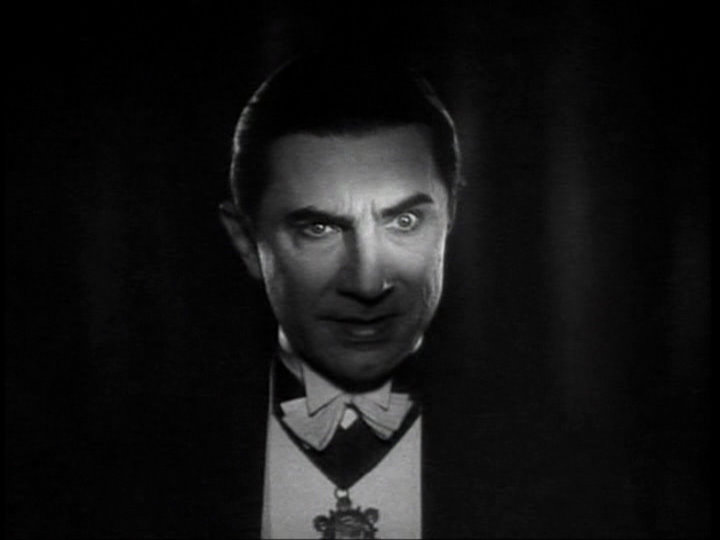
image courtesy of Universal, Bela Lugosi ‘Dracula’

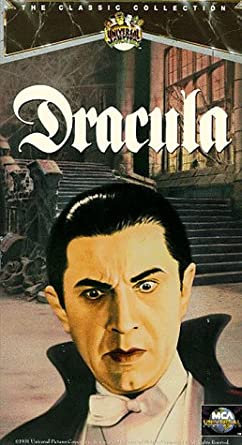
Any of you remember those drop-dead sexy VHS covers Universal released a few decades back for each of their Classic Monsters library?

image via Amazon

One Halloween my mom got me both Dracula and Frankenstein, both of which I’m still proud to say I still own 

I was in 1st Grade and Castlevania had just released earlier that year and was my favorite game. Mom thought it was high time her little Manic watched the very original Dracula movie. I’d seen so many different movies with Dracula in them but never the initial film. That Halloween all that changed. 

I don’t think I moved or fidgeted once. I may have not even blinked! I was transfixed to the glowing screen, it being the only light allowed to remain on, as the living shadows of this gothic epic played out spectrally before my eyes. Sure I was a young kid but the film’s unique majesty and gripping narrative weren’t lost on me. 

To The Prince of Darkness

Now at the end of Bela Lugosi’s birthday, I lift a glass to his eternal legacy. A cheer of thanks and of memories to him.

Against the odds of English not being his native tongue Lugosi pain-stakingly pronounced each word spoken with adjective deliberate concentration. It gave the Count his often mimicked manner of speech and deepened his mesmerizing effect over horror history .

So the imitated accent of Dracula was in fact Lugosi’s Hungarian one. It served the part well.

image via belalugosi.com

Lugosi was not the first choice for Dracula, nor was he even the second. A fact that pained the actor considering how he’d played the part on stage and mastered the role to damn near perfection. So when the time came for him to don the vampire’s cape Lugosi fought and earned his right to bring Bram Stoker’s legendary nosferatu to cinematic life.

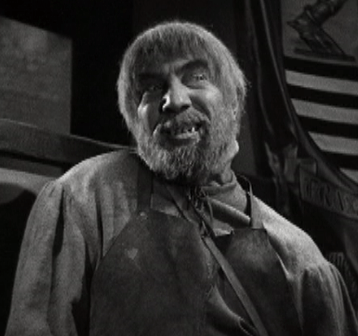
As grand and wondrous as he is in Dracula that’s not, in fact, my favorite of his various roles. That honor goes to his hideously fun part in Son of Frankenstein where Lugosi ditches the cloak for a huched back. Playing the nefarious Igor, Bela Lugosi shines and steals the show!

image courtesy of Universal, Bela Lugosi ‘Son of Frankenstein’

I feel that Igor allowed the man to show his more playful side. Even though his face is hidden beneath a ratty beard and layered of makeup the man can’t help but bristle with fun and life. He never loses that sinister sparkle in his beady, little eyes nor that vicious smile.

You know what? Stop right here. If you’ve not seen Son of Frankenstein then I insist you go do yourself a favor and correct that right away, my Nasties. Go watch Uncle Lugosi have the time of his life!

Bela Lugosi had both magnetism and charisma. Not unlike the genius of Lon Chaney before him, Lugosi could captivate people on a whim.

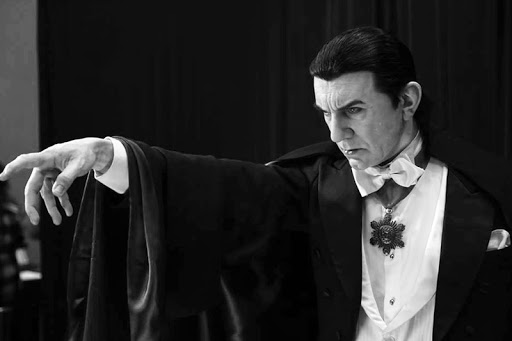
image courtesy of Universal, Bela Lugosi ‘Dracula’

Those who knew Lugosi said he carried an unearthly mystique about him. He would enter a room and every eye would gravitationally be drawn to him.

He was indeed Dracula, so much so that he was even buried in a cape echoing back to his most treasured role. 

Hope you’re enjoying this witching season, my Nasties. And I hope that in your Halloween movie watching you have a chance to pay respect to Lugosi’s devilish spell over horror history.