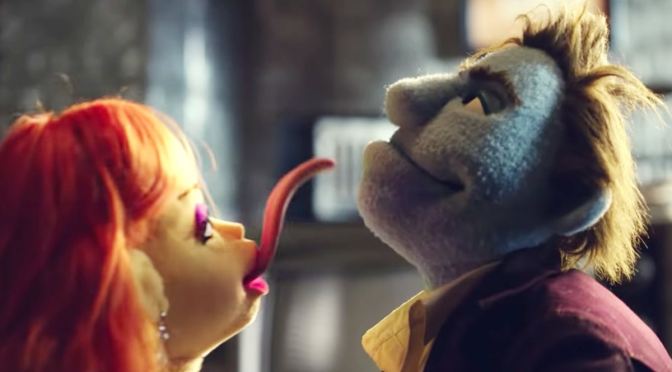
The all-new gloriously, filthy comedy, The Happytime Murders, directed by Brian Henson has a spankin’ new Red Band Trailer and it’s just as humorous as you would expect.
THE HAPPYTIME MURDERS is set in the underbelly of Los Angeles where puppets and humans coexist. Two clashing detectives, one human, and one puppet are forced to work together to try and solve who is brutally murdering the former cast of “The Happytime Gang,” a beloved classic puppet show.
STXfilms’ THE HAPPYTIME MURDERS, stars Melissa McCarthy, Maya Rudolph, Joel McHale, and Elizabeth Banks. Bring your sugar and leave the kids at home as the film opens nationwide in theaters nationwide on August 24.
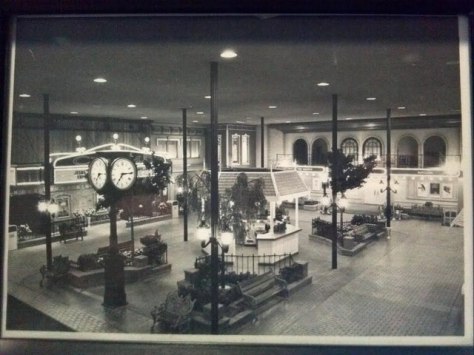
I fondly remember the fateful night in 1990where my father, uncle, my cousin and an eight-year-old Patti made a Saturday night trip to our favorite local movie theater that stood as possibly, one of the last retro looking movie houses in all of Las Vegas. This might sound silly as of course, this was 1990, but I’m talking SUPER RETRO here. The entire building was made of brick, popcorn stands where mere popcorn and hot dog carts inside the lobby with a few cases of candy on the side, velvet red curtains covered the theater screens until showtime commenced, and the GIANT illuminated cinema marquee sign that displayed the featured films playing, could literally be seen from miles away. The place was absolutely beautiful inside and out, (as you can see pictured below of the inside lobby) and served as the place where I had seen most of the movies growing up until its demise and demolition over 15 years ago.
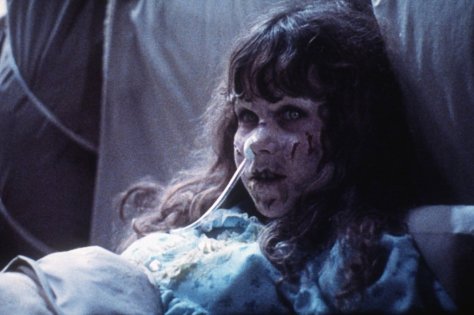
It’s also the place where I first saw our movie of the day here, The Exorcist III. And yep. I remember peeing my pants a little as I was eight-goddamn-years-old in regards to that one scene. You know which one I’m talking about… And also, yes. The two grown men and older teenage male cousin laughed at the eight-year-old girl who produced a squirt of nature’s lemonade.
Dicks.
*MAJOR SPOILER HERE. DO NOT PROCEED IF YOU HAVEN’T LIVED AND HAVE DONE A DISSERVICE TO YOUR LIFE BY NOT WATCHING THIS FILM.
As fun as it is to reminisce about peeing the pants, let’s get to the real topic here. If you’re here and still reading, chances are you’re a fan of the HIGHLY UNDERRATED psychological-thriller based off William Peter Blatty’s fantastic novel, Legion; which of course, serves as the true direct sequel to The Exorcist. So, we’re going to skip all the captain obvious bullshit plot explanations and get right into some shit that you may or may not know about this film. And hell, if you watch it again with a new knowledge and some more appreciation, well stunning. I’ve done my job here.
1. The Exorcist III Was Jeffrey Dahmer’s Favorite Movie
Well, a film that focuses on another serial killer doesn’t seem far-fetched as a favorite of one of America’s most notorious, eh? According to various old reports, Dahmer would watch the movie over, and over. And even watched portions of the film with some of his victims after bringing them back to his apartment. One of these men was one who had escaped- Tracy Edwards, who claims the film was on at the time he was guided around the apartment by Dahmer. Reports also claim that Dahmer had purchased contact lenses with yellow tint, to mimic The Gemini Killer.
2. They Snuck In A Reference To The Fly II
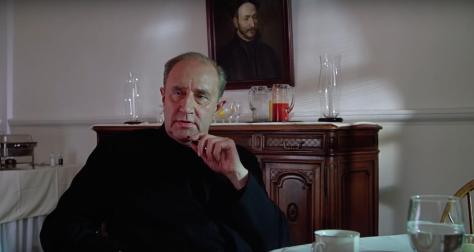
As I may have stated in previous articles, my parents had no qualms about taking their young child to the theater for an extreme horror film. Becuase, hey, fuck 101 Dalmations. They didn’t have the patience for that watered down-Disney shit. So, watching this at the theater at the age of eight, I caught this one right away as I had seen The Fly II a year prior with my mother and I left the theater crying after the scene with the dog. Ugh. I still hate it. Anyway, Lee Richardson plays that asshole in that film that got his just desserts for hurting that animal and has a small part as the University President in The Exorcist III. When asked by Father Dyer what his favorite film, he replies coyly, “The Fly.”
*Also worth noting, Brad Dourif who brilliantly portrays the Gemini, references his cinematic alter-ego Chucky during one of his ramblings. In the film, he says, “It’s child’s play”, and we then cut to a scene to a young boy that resembles a Good Guy.
3. Both William Friedkin and John Carpenter Were Attached To Direct Before Blatty
Well, it certainly would have been iconic enough had OG Exorcist director William Friedkin at the helm once again, but John Carpenter?! That would have been something to see his vision of legion eh? Blatty originally collaborated with Friedkin and penned out The Exorcist III with Friedkin attached to direct. After Friedkin backed out, the project died and was turned into a novel- AKA Legion. After the success of the novel, Blatty offered out it on the market in the form of a screenplay and Morgan Creek bought the rights to make the film, whom brought on the legendary John Carpenter to direct. However, after seeing Blatty’s passion and visionary input regarding his adaptation, he stepped down to hand the reigns to the rightful owner.
4. A Plot Twist Was Suggested Involving Regan Macneil- And A Birth Of Possessed Twins….?!
This has to be the most WTF fact of them all…
Yes, this was suggested to William Peter Blatty as studios were in negotiations to adapt the screenplay by Carolco Pictures. The idea of a grown-up Regan giving birth to possessed twins completely undermines the whole idea of Legion and I don’t blame him a bit for laughing that off and settling with Morgan Creek Productions- even if they still haven’t given us a REAL directors cut of the film, at least that didn’t happen.
5. The Alternate Ending We Still Haven’t Seen
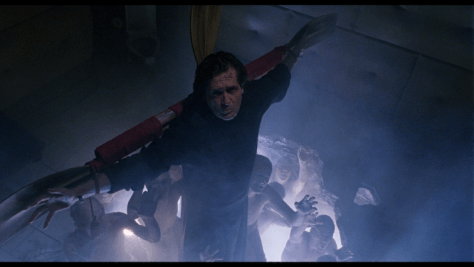
The ending we all know, and even in that Shout Factory edition, was not the intended final vision of Blatty. Reports claim it was scripted AND filmed, but we’ve still yet to see the dramatically different ending to The Exorcist III. But you know, Morgan Creek wanted that exorcism in there, so if moneybags wanted it, by God they were going to get it and the following was scrapped and reshot to their liking:
The novel Legion ends with the Gemini Killer summoning Kinderman to his cell for a final speech and then willingly dropping dead after his alcoholic Christian evangelist abusive father, finally dies from a heart attack. As his motive for killing was always to shame daddy, the Gemini’s reason for remaining on Earth ceases to exist. He then drops dead, thus freeing Karras. Albeit by death, but nevertheless releasing him from all the torture. In Blatty’s original screenplay adaptation, the ending is similar to the novel except that the Gemini’s death is not self-induced but forced supernaturally and suddenly by the death of his father.
The Exorcist III remains criminally underrated and if anything to the haters, (and really, who are you?) serves as a beautiful character analysis of different walks of life in the form of one chilling film. Aside from Silence f the Lambs, it stands as one of THE BEST psychological thrillers in cinematic history. Bold statement? Maybe. Perhaps you should schedule a rewatch and come back to comment to challenge me.
That’s me issuing a clear invitation to the dance. Pick up your copy from Amazon here!
Tobe Hooper once said “I don’t believe in using too much graphic violence, although I’ve done it. It’s better to be suggestive and to allow the viewer to fill in the blanks with their minds.” The Texas Chainsaw Massacre (1974) is not one of the finest horror experiences ever put to film because of on-screen slaughter, but rather the suggestion of bloodshed. The long-lasting effect of Hooper’s direction was borne from the simple presentation of a scenario, the resulting (and very personal) nightmares were conjured entirely within the headspace of whomever laid eyes on it.
The concept isn’t exclusive to TCM, but certainly applies to John McNaughton’s tense tale of a week in the life of a sociopath, 1986’s Henry: Portrait of a Serial Killer. Though it made its way around film festivals for years, the Motion Picture Association of America’s inability, or unwillingness to give it a straight R-rating delayed its limited theatrical release for 4 years.
As legendary film critic Roger Ebert noted, however, “This film deserves to be seen,” and over the course of more than three decades, it has become essential viewing for horror aficionados everywhere. And not for overt violence, although like Hooper, it had its fair share, but rather for what wasn’t seen.
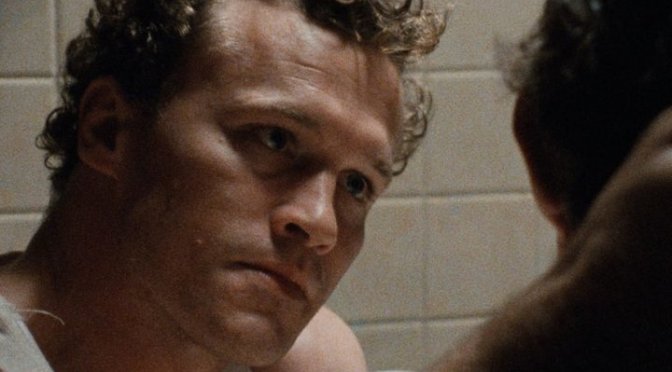
Make no mistake, the reasons for suggestion in this case were partially due to budgetary and time constraints. However, McNaughton wanted to truly explore the inner workings of Henry’s (Michael Rooker) mind, as well as his relationship with Otis (Tom Towles) and Becky (Tracy Arnold), which meant that on-screen violence would have to be dispersed carefully, but to offer a true glimpse at the danger housed within the protagonist, the film would need to be littered with other misdeeds.
And that is where the power of suggestion entered the equation, in part through the utilization of brilliant music cues strewn throughout by film editor Elena Maganini. Portrait of a Serial Killer’s main theme is composed of the simplistic yet powerful piano chords of Ken Hale, Steven A. Jones and Robert McNaugton that matched Rooker’s icy glare, begging the question, what truly resided beneath the surface.
The horrors left in Henry’s wake were revealed through a series of pan shots, offering a peek behind a veneer that should never come into focus. Again, the issues of budget and time factored into McNaughton’s decision-making, yes, but ultimately the road followed was that which would make the greatest impact, and that avenue was paved by sound editor Cory Coken and post-production sound mixer Ric Coken. The audible screams of victims blended with Henry’s angry commands to “shup up!” underneath ghastly visuals painted a picture that turned blood cold, as viewers were burdened with whatever terror played before their mind’s eye thanks to the macabre melody dancing through their heads.
All which set up McNaughton’s final stroke of genius.
After Henry returned to the apartment to find Otis raping his sister, and the ensuing scuffle that resulted in Otis’ death, Henry’s instinct took over and he dismembered his friend’s body in the bathtub before hitting the road with Becky.
In a wink to the audience, another music cue foretold Becky’s fate, as “Loving you was my mistake” sprang from the radio before the pair reached their roadside motel.
The following morning, pulling to the side of a desolate road in the middle of nowhere, Henry exited his vehicle and waited for cars to pass before he opened the trunk. When it had reached its apex, it was accompanied with a single, ominous piano chord. To that point, there may have been hope that Becky had already been in the car when the vehicle pulled away from the motel, but in that moment, the audience knew.
Henry waited for another car to pass, then glanced over his shoulder to ensure no others were coming, lifted Becky’s blue suitcase, now her tomb, and laid it at the top of a ditch beside his car. Once again, the terrified shrieks of one of Henry’s victims echoed as the luggage connected with the earth below. McNaughton had cinematographer Charlie Lieberman hold the shot, and slowly zoom to the blood-smeared bag, a grotesque exclamation point on a film that has always carried an unsettling tinge of documentary.
As Henry pulled away and the camera closed in, all that was left were the curdling chords of Henry’s theme, and the remains of the one person it appeared Henry may have had the slightest sentiment for. Uncaptured and unpunished, the sounds perfectly encapsulated the unknown of where Henry, or those like him—who unquestionably exist—would head next.
The visceral images of McNaughton’s masterpiece proved too much for many audience members to endure when it first reared its head at film festivals decades ago, and abandoned it to what Ebert described as “the purgatory between [an] R and X [rating].” The film was too powerful and too well done to be contained for long, but for the violence we witnessed, including the devastatingly difficult to digest home invasion segment, it was the intonations left unseen that made Portrait of a Serial Killer so indelible.


 After Henry returned to the apartment to find Otis raping his sister, and the ensuing scuffle that resulted in Otis’ death, Henry’s instinct took over and he dismembered his friend’s body in the bathtub before hitting the road with Becky.
