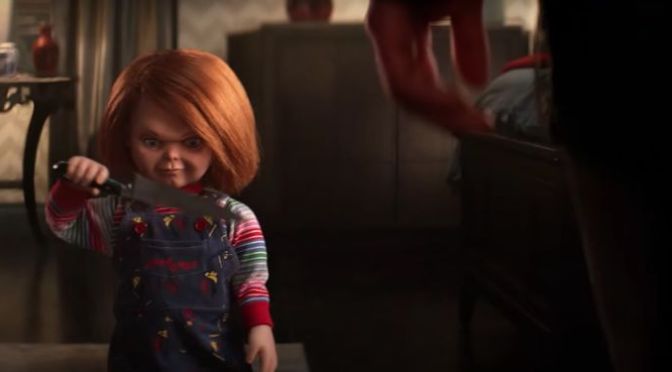
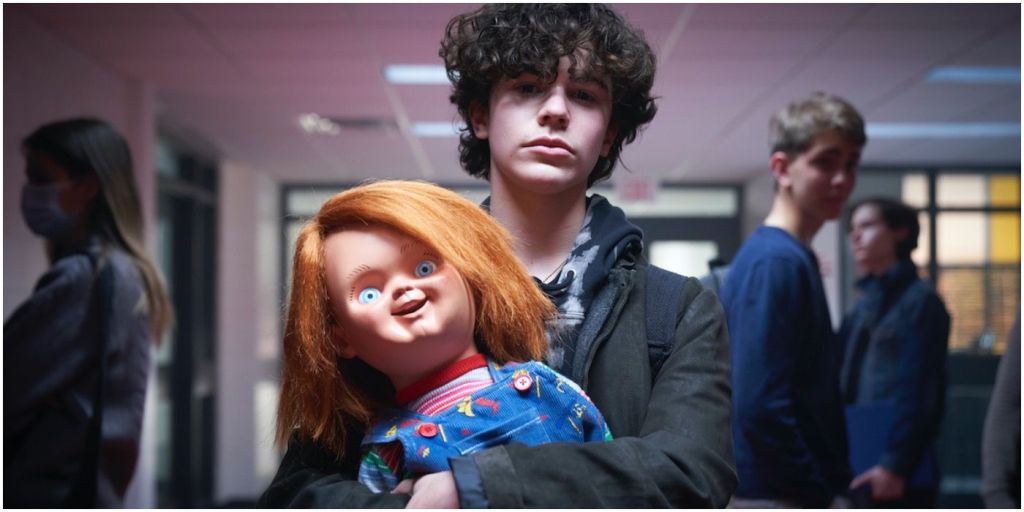
It’s time to play… again. But this time over at SYFY in collaboration with the USA network for a series to premiere exclusively on the platforms just in time for the Halloween 2021 season!
Produced by Channel Zero‘s Nick Acosta and Child’s Play forefather Don Mancini, the show centers around a teenage artist (Zackary Arthur) who is struggling with his sexuality after coming out as well as dealing with the recent loss of his mother. As we can all can guess, this unfortunately causes some bullying for the young boy. He comes across Chucky at a local yard sale, and with him being an artist and all, buys the good guy for some parts for a sculpture- but umm, yeah the doll has other plans.
The cast of Chucky also stars Lexa Doig (Jason X) and Devon Sawa (Final Destination) as well as returning fan favorites Jennifer Tilly, Fiona Dourif, Alex Vincent, Christine Elise, and Brad Dourif, who once again voices the plastic tiny terror.
Chucky will premiere Oct. 12 at 10 p.m. on USA and SYFY.
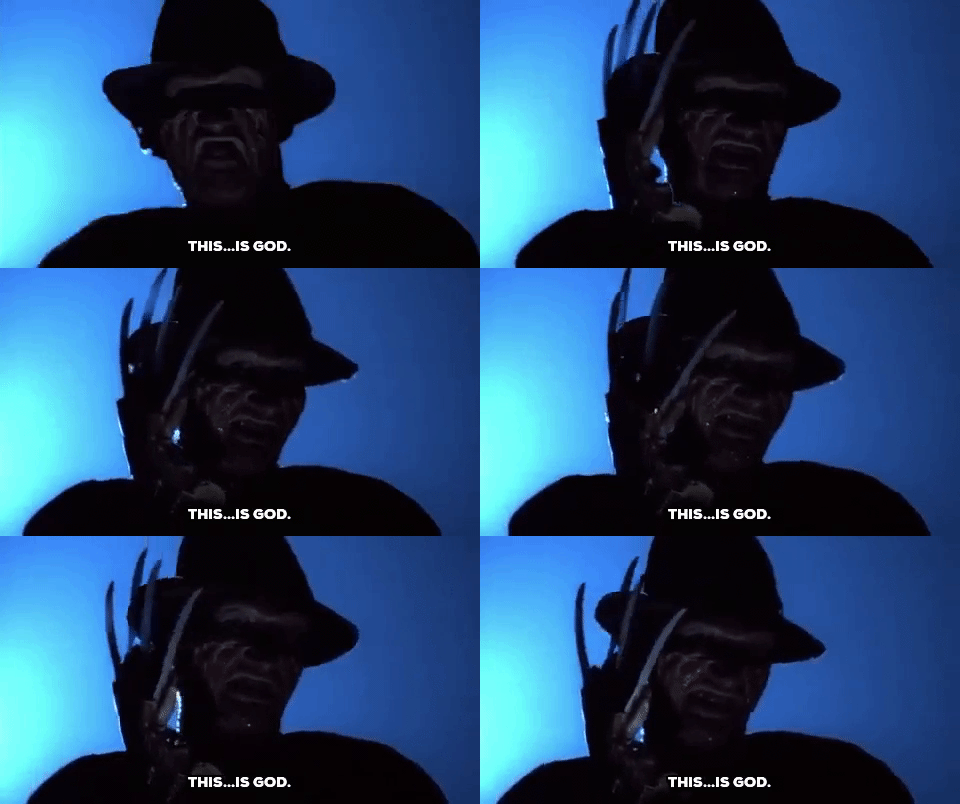
Man. The deeper impact this deleted scene from A Nightmare On Elm Street gives to the word “private justice”, should have been left in.
The fact that Freddy-Mania took over the 80s’ and the unforgiving character that lived off the blood of children became a pop-culture phenomenon, kind of blows my mind. I was totally a part of the Freddy Fandom as a kid and still am to this day. However, thinking back now as an adult how Freddy was mass marketed to children from bootleg toys, plastic Halloween costumes, horror hotlines, and even a stint on MTV, just goes to show he was a true force to be reckoned with the future of America.
Yes. We are the generation that holds a child-murderer as a GOD in the genre and we make no apologies for it.
But I kind of feel bad about it now and you might too after learning that Nancy wasn’t always an only child. In fact, Freddy killed him/her. And is what drove Nancy’s parents to the brink of madness in doing what they did to him.
Knowing this now, the final battle between Nancy and Freddy makes it that much more personal; as it would for just about anyone that had a family member killed by a son of a thousand maniacs. Why Wes Craven chose to discredit it entirely and keep this particular dialogue out of the scene between Nancy and her mother Marge in the basement (of which most of the rest was kept in the movie), I suppose we might not ever know. But it surely adds a lot more hatred between the characters. In the rough cut of the scene provided by YouTube Channel Gabi Ferretti below, it also hints Nancy’s friends’ Rod, Tina, and Glen also had siblings that were murdered by the cruelty of Krueger- which would lead us into the private justice and mob mentality nature of his origins. Also, it’s sort of full-circle that the remaining siblings are so close-knit now. Or were rather as they were picked off one by one in the movie.
This could have changed the whole tone of the film, but personally I feel like it should have been kept in. It just adds to the cruelty that really was Krueger. Then again, had they gone into a deeper explanation painting a picture of his pure evil, we may have never had lunchboxes with Freddy’s face on them as kids.
The subject material you’re about to encounter has vehemently been condemned and is strictly considered immoral by nanny courts. These images are bound to exhort nothing short of moral panic.
They depict excessive amounts of blood, guts, violence of the most enthusiastic sort, lots of sexy filth for the sake of making people blush, and, in short, are certainly enough to make your grandmother feel ashamed of you for enjoying this kind of stuff. You may enter at your own risk, my Nasties, but let’s face it. I already know you want it. So grab a shovel because we’re gonna dig deep into the shocking world of exploitation art!
They were criticized upon their release, made people feel very icky in the gutty guts, and were considered to be the precursor of an oncoming collapse of society. That collapse though never happened, as if anyone was surprised. But in a quick panic the leading authorities rushed to ban each of this movies due to the explicitness of their covers and their lurid titles. I mean each one promised an apocalyptic orgy of violence and indecency for Heaven’s sake.
This banning was for your protection. And of course, those of us from all aspects of the horror community, be it the Drive-In Mutants, the Slasheristic Gore Fiends, or, oh yes, you, my lovely Nasties, all join together to flip a fervent middle finger right in the smug face of the censor boards.
Long live the nastiness, and long live horror!
BRING ON THE EXTREME!
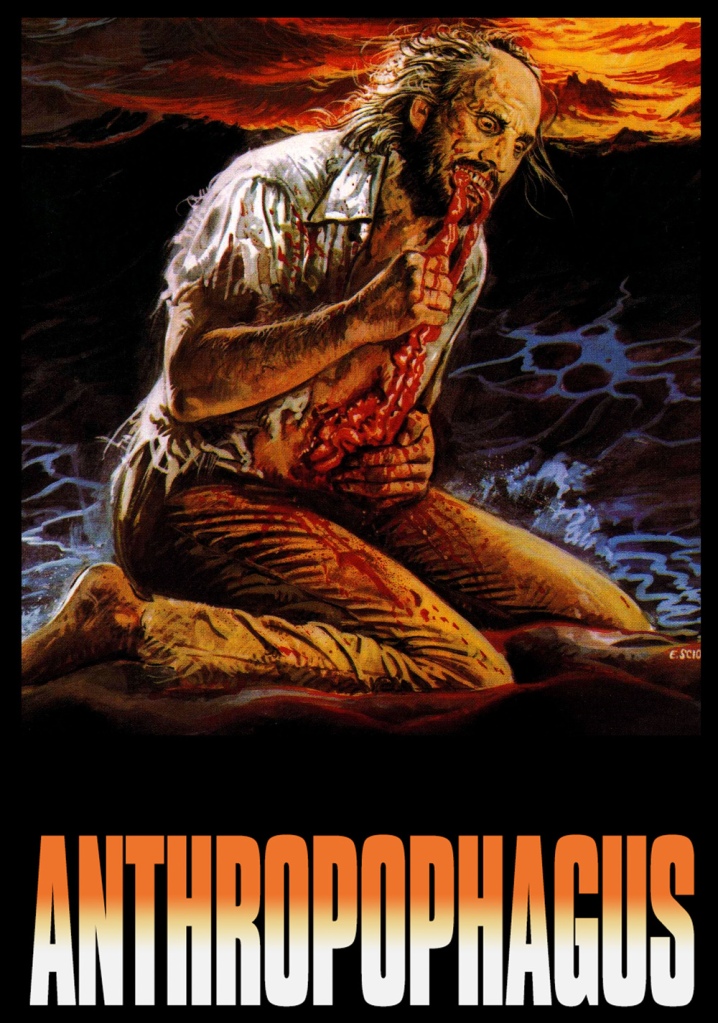
Zombies rising from the dead to tear out the throats of the living, chainsaws waving in the early morning air, splintering eye gauging, arterial spray, beheadings a plenty, and oozing guts being pulled out for the sake of self-cannibalism! These are the images splattered across exploitation horror covers like a heavy misting of an open vein.
This is where the splatter film was bred and given room to mutate. These grotesque visions led way to Death Metal inspirations, influenced the likes of Eli Roth and Quentin Tarantino, and led way for future horror extremists to realize their own wicked visions.
One common thing was shared between these extreme films: a complete disregard for the human body. The imagination behind these titles was to break apart the fragile human shape and leave it (literally in some cases) in messy pieces as some titles suggested. And when it came to exposing the human form there was no discrimination. The male nude body was often thrown before an unsuspecting audience as well as plenty of wang-doodle chopping. Like seriously, that weeny hacking stuff happened alot (and not saying the characters didn’t in fact deserve it) so be ready to cross your legs, fellahs.
They’ve been called filth, exploitation, and Video Nasties. Fans call them classics and consider them a rite of passage as one matures from Psycho to Texas Chainsaw Massacre. These movies are the next step, a slippery slope dipping into a very seedy world of drills, kills, chainsaws, and rusted hooks where our heroes face the ravenous undead, sadistic psycho maniacs, nuns who are anything but pure, and lots, and lots of stabby things with pointed-ends.
In the days long before Google horror fans with a flair for the more extreme side needed to rely on either word of mouth or the images these harsh titles presented on their covers.
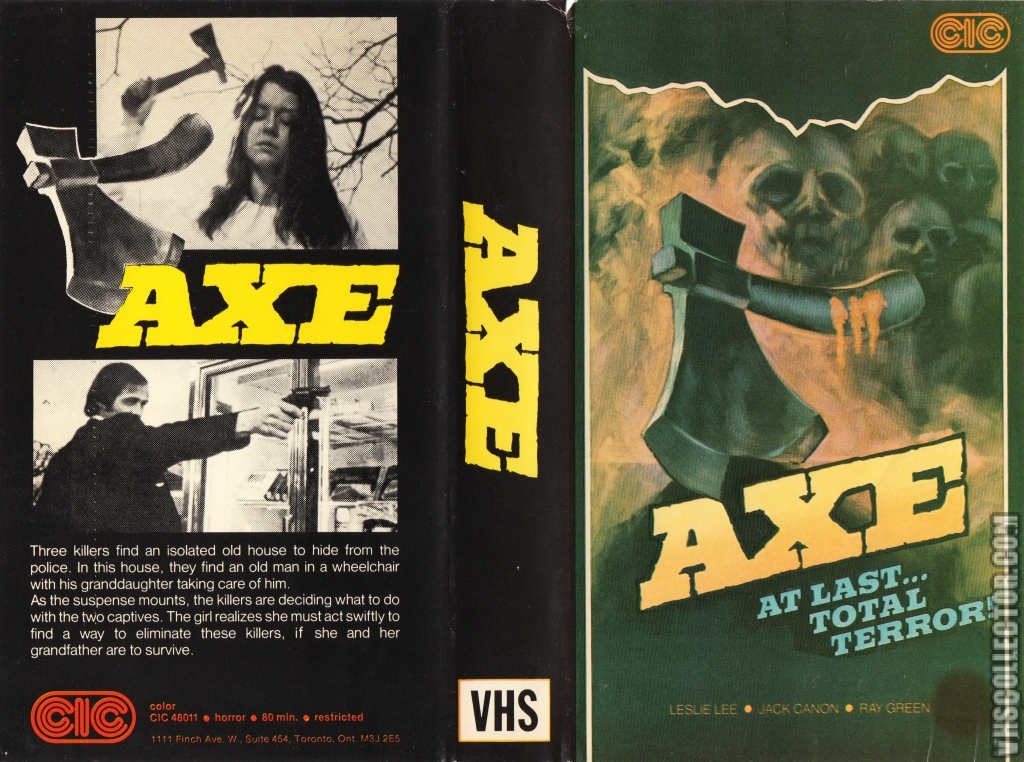
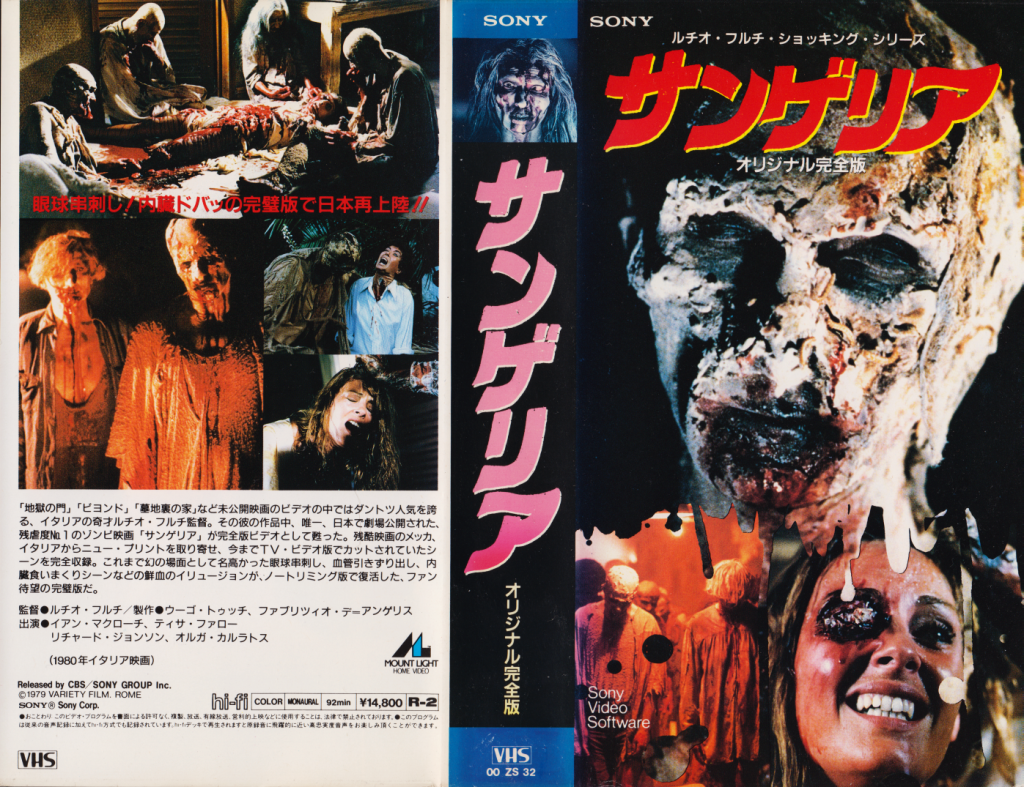
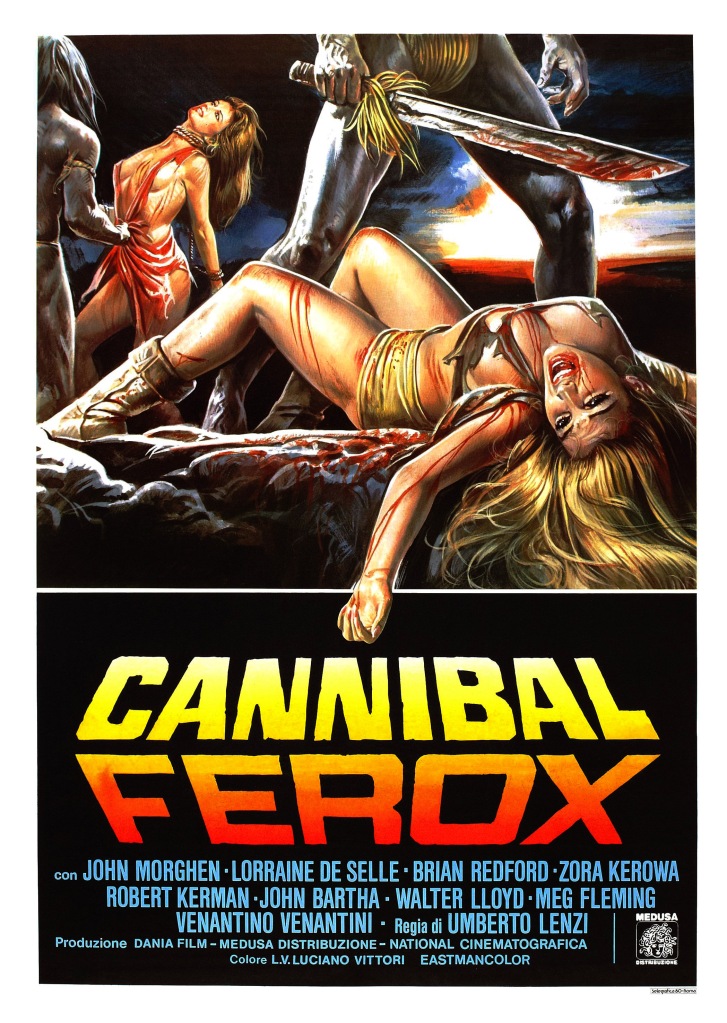
The artwork was what sold these movies
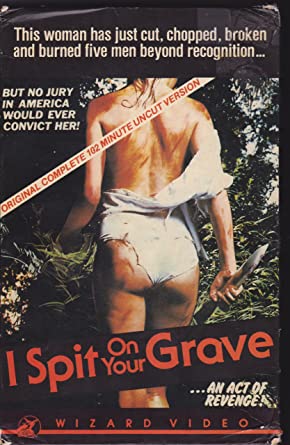
In many, many cases the artwork alone was the only sneak peak we were given to make up our minds on whether to try out a movie or not. You’d hold a copy of I Spit On Your Grave in your hands, and, if you didn’t know anything about the flick, your imagination would swim out into a very dark lake of possibilities to what this film could hold in store. The cover suggested a fair deal of sexuality and, based on the knife in the unknown lady’s hand, plenty of good ol’ violence. I mean I was a kid when I first held this movie in my hands and – in those naïve days – I thought it would have something to do with a graveyard and zombies.
I was a stupid fucking kid.
In many cases the cover art alone was enough to earn these daring movies an explicit rating. And, in most cases, the posters left very little to the imagination.
These movies were very upfront about their ghastly content. And you gotta remember these were years before we had Death Metal bands and heavy metal was just starting up. So for the most part culture – as a whole – was not at all prepared for this level of hardgore material. This stuff was crawling out of the crypt whether people were ready for it or not. Now it’s almost old hat, but back then this stuff, (art, keep in mind art alone), was a serrated knife cutting the nerves of society’s disquiet.
Art And Repulse
But it wasn’t like we had the internet in those days. We couldn’t pull up IMDB or watch a trailer on YouTube. We had a brief description on the back and the cover art that lingered in our minds. So it was all up to that cover art to pull us in, and the artwork did a very good job.
Maybe a little too good actually.
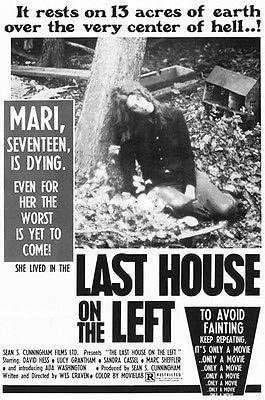
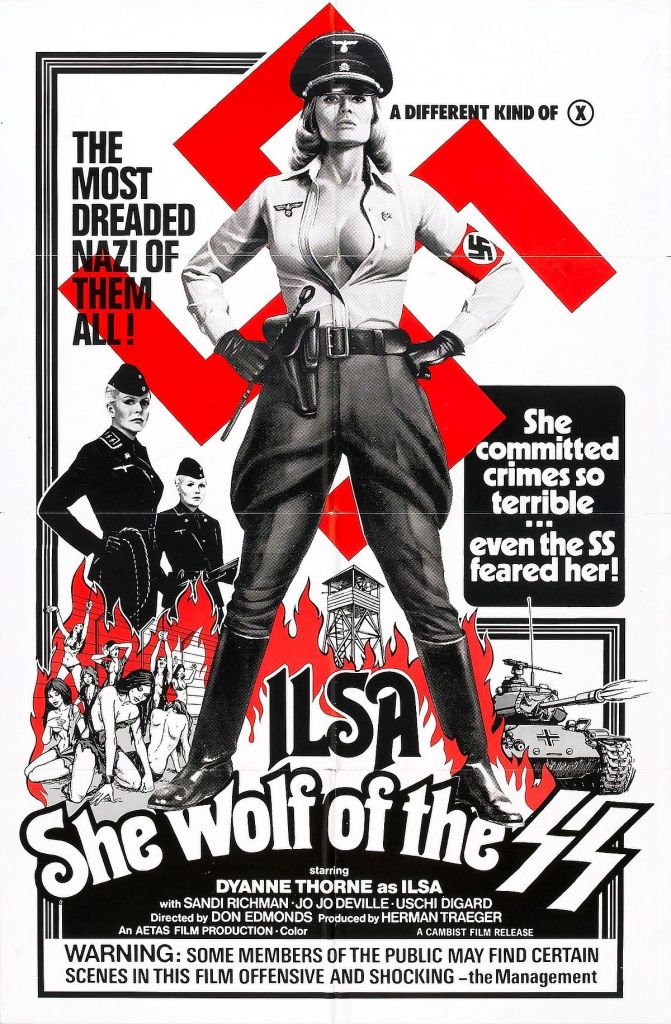
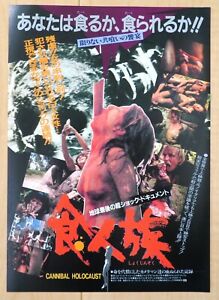
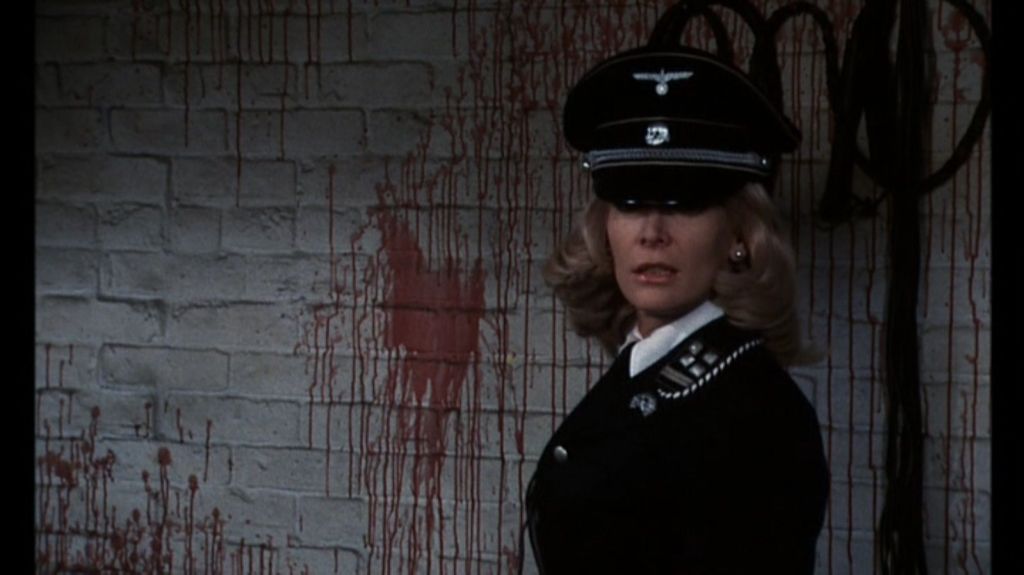
But these movies not only had macabre covers, they also had names that screamed at us, slapped us in the face, and captivated the attention. The Last House on the Left, House By the Cemetery, Isla: Shewolf of the SS, Driller Killer, They Call Her One Eye, Cannibal Holocaust, Make Them Die Slowly, Eaten Alive, Nekromantik, and Zombie Flesh Eaters to name just a few.
These movies were built on razor-thin budgets and had nothing left over for advertisements. They solely had to rely on the artwork of their covers and their brilliant titles to lure in audiences and make back a profit. And not only did the plan work, it went and worked a little too well.
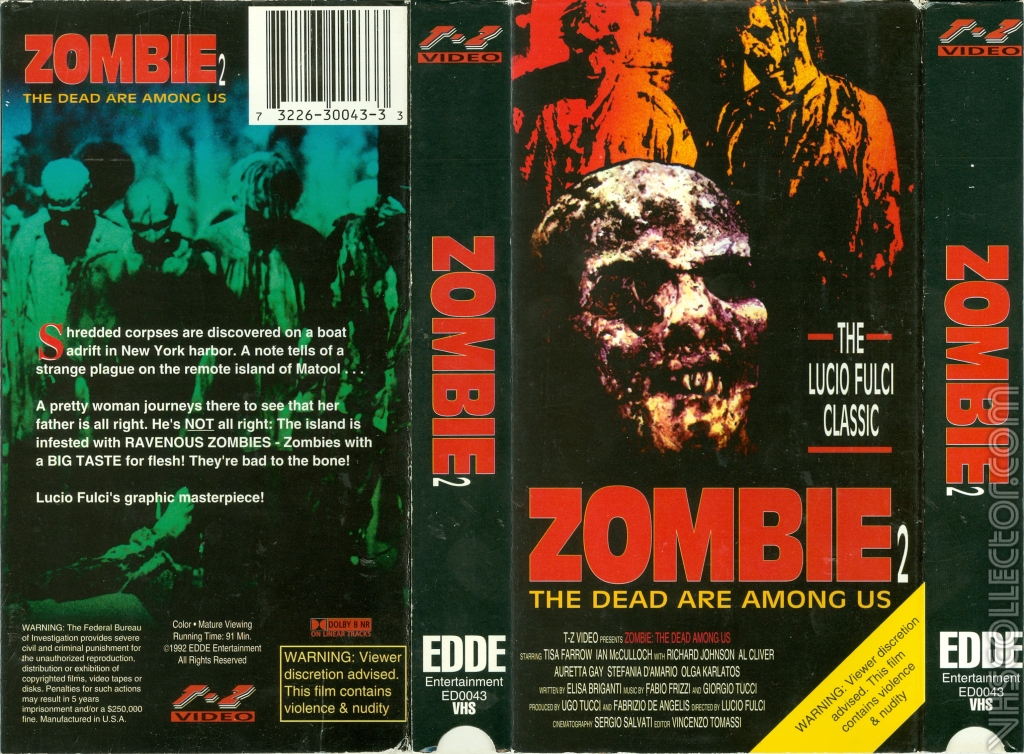
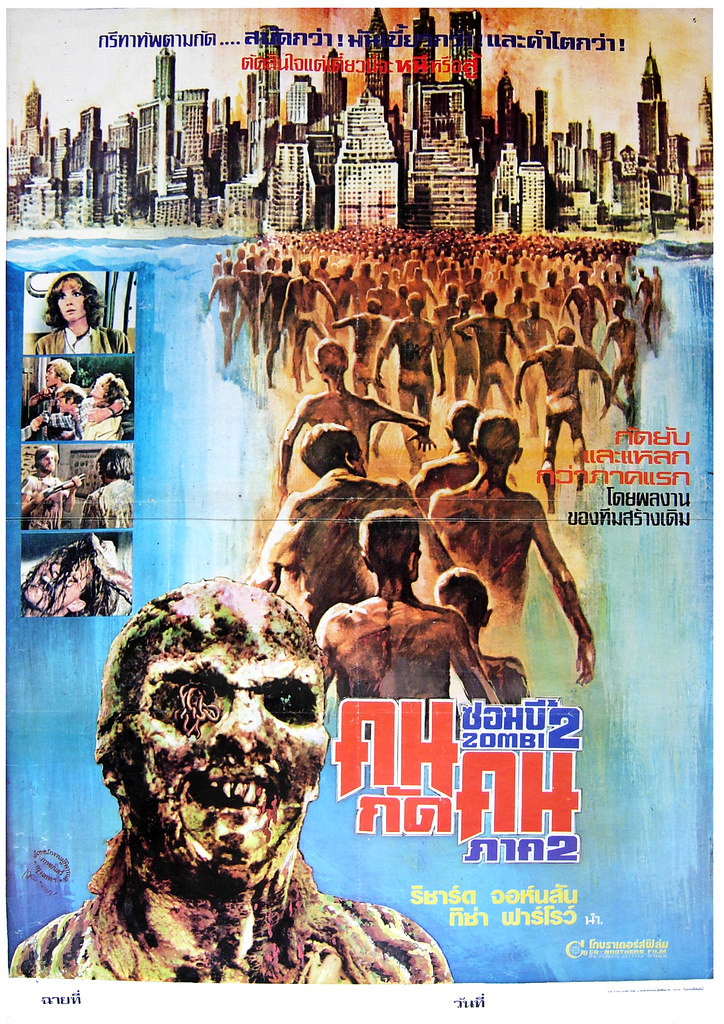
And in many cases once these films hit foreign markets the grotesque and macabre were both raised to new levels of alarm as even more explicit images came into being to promote the titles. Here’s a small sampling of just one of these movies (in this case Zombi 2) and how it changed (mutated) around the world.
Judging by the different versions of the movie’s international artwork leaves a feeling like you’re gazing at four entirely different films even though it is Zombi 2, yours truly’s favorite zombie flick btw.
And just because, here are a few more examples. The stark difference between home release and the foreign market’s has fans now scouring the internet and hitting conventions hoping to obtain some of these rare and unique posters to add to their horror collections. And who can blame them? This stuff is bragging rights.
The writing was on the wall, written in blood and clear as day. Shock sold. The competition for gore and the grotesque was on. When Deodato released his infamous Cannibal Holocaust Umberto Lenzi followed suit and released his Cannibal Ferox aka Make Them Die Slowly.
Stakes were raised and film makers strove to outdo what came before them. More guts! More flesh tearing! More death! Make it slow and more brutal! More sex, more screams, more everything! It didn’t take long though before this underworld of rebel cinema was discovered and promptly exposed.
Many of these titles were labeled Video Nasties and wound up on the banned list in many parts of the world. It became an insane time when the ultra-right sent police officers into people’s homes if it was even rumored some poor sap owned a copy of the Evil Dead. So the popularity of the films backfired on video shop owners and fans alike.
It’s a case of an art form working a little too well.
Just how insane did it get, you ask?
Bill Lustig (director of Maniac) mailed a copy of the movie’s soundtrack (the soundtrack mind you) to a friend over in England but custom agents seized the record and kept it due to the Obscene Act. It was only a fucking music record! What the Hell did they think the music could do? Rip the listener’s eardrums out and fuck the ear hole to death? But the Video Nasties paranoia was in full effect and these people were taking shit far too seriously.
Adult men and women went to storming video fronts and apprehending movies as if they were contraband, and it was all due to the film’s covers and titles. In a stupid mistake (as if the whole Act itself wasn’t stupid enough) the movie Apocalypse Now (Marlin Brando, Martin Sheen) was banned for a quick moment because of its title alone.
And that’s just it, no one took the time to actually review these movies. They took them at surface level alone. Dolly Parton’s Best Little Whore House in Texas found itself in hot water due to title alone as well. That means a Dolly Parton movie sat on the same banned shelf alongside the Ilsa series! You have to see the humor in that.
These movies struck a raw nerve, more like severed the motherfucker with a rusty pickaxe, and everyday normal people were being threatened with jail time and fines.
I would have been utterly fucked, my beloved Nasties! My library would have made their toenails curl.
Fans pushed back and the restrictions just made us want to see these obscene films that much more. And, as it always seems to do, the people who would censor these moves (and their naughty covers) out of existence finally lost the fight and had to shut the fuck up. Even so it took decades before Last House on the Left was legally allowed distribution in the UK.
Today fans can own each of these lurid titles thanks to boutique Blu-ray companies like Synapse Films, Blue Underground, Severin, and Vinegar Syndrome. There are also the large companies, like Arrow and Scream Factory, that make titles available for fans. So we’ve got it made for the most part.
In the end, horror won. If you now want to own a copy of Emmanuelle and the Last Cannibal, well that’s your right.
Art doesn’t mean it’ll speak to everyone. Some will be repulsed by it while others are amazed. That’s how you know it’s done right.
The world of exploitation not only lives on in the memories of its fans but today is faithfully continued forth and allowed to expand to new depths of visceral art by Eibon Press who capture the spirit and lovingly expand upon many of the classic titles fans love. They aren’t paying me to promote them but they’ve won me over as a fan and I can genuinely say go check them out. Anyone who loves exploitation will love these guys.
But before I go if you have any posters or VHS copies of these titles (or others) be sure to share them in the comments. We’d love to see what dark wonders sit in the crypt of your collection.
And if you like our style and want to support us:
Be sure to subscribe to Fangoria, who we’re now affiliated with, by clicking here!
![[VIDEO] The Deleted Scene From “A Nightmare On Elm Street” That Reveals Nancy Had a Sibling](https://nightmarenostalgia.com/wp-content/uploads/2021/07/nightmare-on-elm-street-deleted-scene.jpg?w=672&h=372&crop=1)
![[VIDEO] THE DELETED SCENE FROM "A NIGHTMARE ON ELM STREET" THAT REVEALS NANCY HAD A SIBLING](https://nightmarenostalgia.com/wp-content/uploads/2021/07/noes-glove.gif)